Articles

How Play Helps Children Develop Problem-Solving Skills

How Play Helps Children Develop Problem-Solving Skills

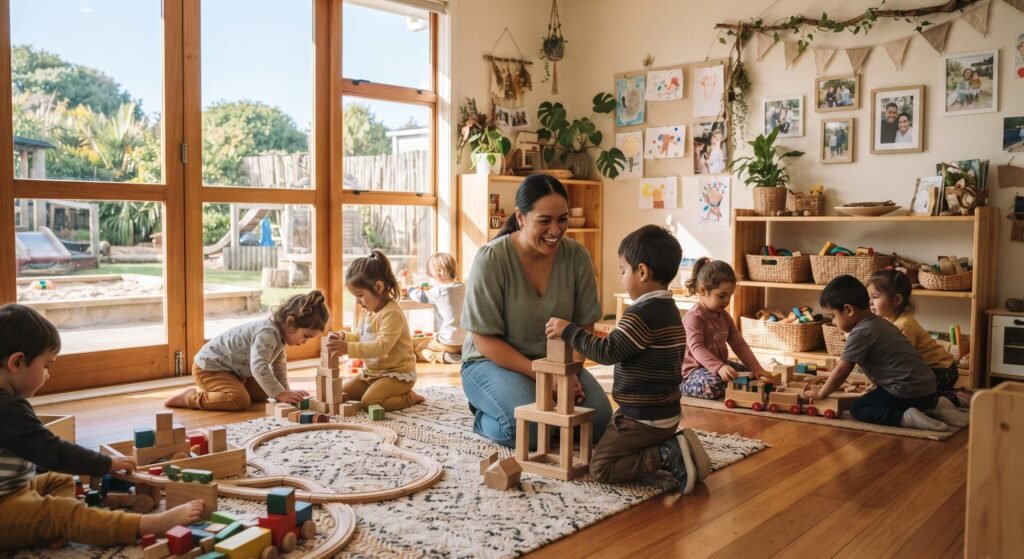
Problem-solving grows when children can test and revise ideas Play creates real problems that children care about solving: balancing a tower, moving water, joining a game or making a costume stay together. Kaiako can protect time for investigation, offer open-ended materials, model useful language and provide a prompt without supplying

Read More »
Supporting Independence Without Rushing Children

Supporting Independence Without Rushing Children

Independence develops through supported participation Supporting independence does not mean leaving children to manage alone or expecting skills before they are ready. It means involving them in meaningful routines, offering suitable choices, breaking tasks into manageable parts and reducing help gradually. Children may become more independent at different rates and

Read More »
Building Confidence Through Everyday Childcare Experiences

Building Confidence Through Everyday Childcare Experiences

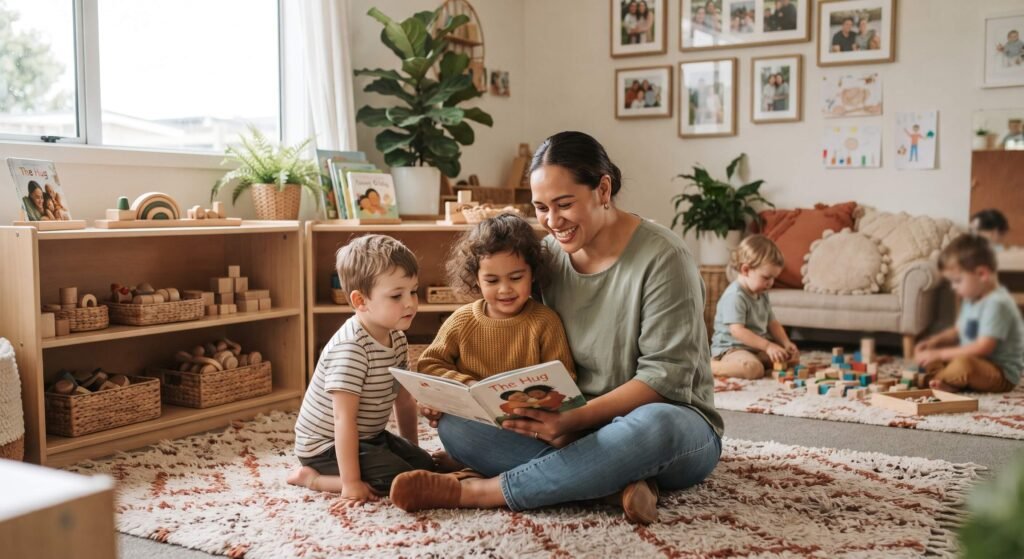
Confidence is built through belonging, agency and achievable challenge Confident children are not always the loudest or quickest to join in. Confidence may look like seeking help, trying again, sharing an idea, choosing a role or returning to a difficult task. Early learning can support it through secure relationships, meaningful

Read More »
How Early Learning Supports Children’s Communication Skills

How Early Learning Supports Children’s Communication Skills

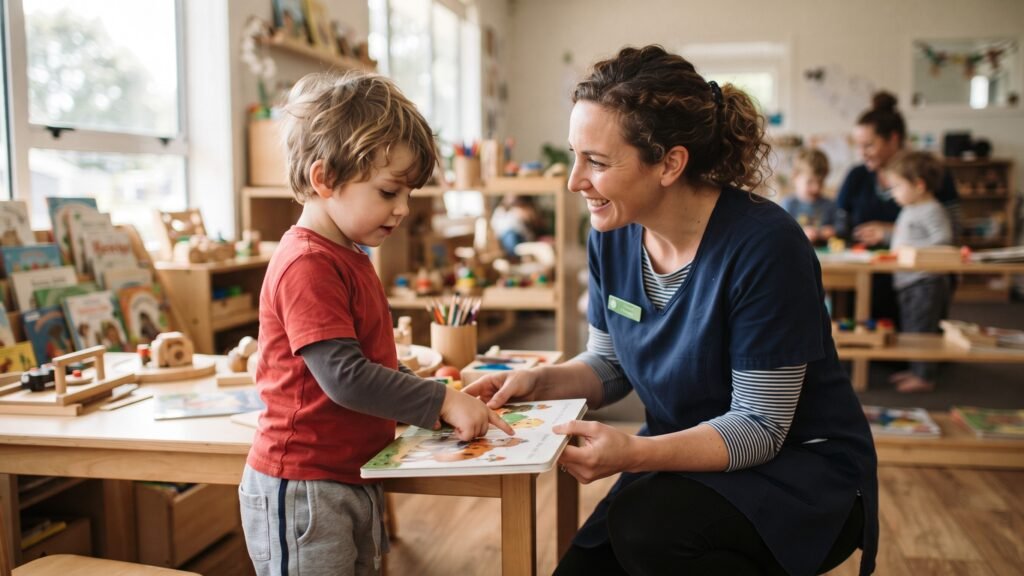
Communication grows through responsive, meaningful exchanges Early learning supports communication when children have attentive partners, useful reasons to communicate and many ways to express meaning. Conversations, songs, stories, gesture, movement, drawing, home languages, te reo Māori, New Zealand Sign Language and communication supports can all contribute. Progress is best noticed

Read More »
Why Home Languages and Cultural Identity Belong in Childcare

Why Home Languages and Cultural Identity Belong in Childcare

Home language carries relationships, knowledge and identity Welcoming children’s home languages helps affirm culture, identity, belonging and communication. Bilingual and multilingual development follows varied pathways: children may mix languages, listen before speaking or use different languages with different people. Early learning should add opportunities without asking families to replace a

Read More »
Celebrating Cultural Events in Early Learning

Celebrating Cultural Events in Early Learning

Meaningful celebration grows from relationship and continuity Cultural events can strengthen identity, curiosity, respect and whānau participation when they are planned with knowledgeable communities, connected to everyday curriculum and represented accurately. A single food, costume or craft should not stand in for a whole culture. Children need context, varied perspectives,

Read More »
How Te Reo Māori Can Be Woven Naturally Into the Childcare Day

How Te Reo Māori Can Be Woven Naturally Into the Childcare Day

Everyday use gives te reo Māori continuity and purpose Te reo Māori can be woven through greetings, care moments, play, songs, stories, counting, feelings, place and genuine conversation. Natural use is regular, accurate, responsive and connected with tikanga and relationships. It is not limited to a themed week or a

Read More »
Mana Aotūroa: Learning Through Exploration

Mana Aotūroa: Learning Through Exploration

Exploration turns curiosity into working knowledge Mana aotūroa | Exploration supports children to learn through active investigation of natural, social, physical, spiritual and human-made environments. They move, observe, ask, predict, test, compare and revise ideas. Kaiako provide time, adaptable resources, language and safe challenge while resisting the urge to solve

Read More »
Mana Reo: Communication Through Words, Stories, Art and Movement

Mana Reo: Communication Through Words, Stories, Art and Movement

Communication is larger than spoken vocabulary Mana reo | Communication supports children to express and interpret meaning through spoken and home languages, gesture, signs, stories, images, music, movement, dramatic play and other symbols. Responsive early learning gives children real reasons to communicate, protects the languages and cultural forms important to

Read More »