
Articles

Supporting Children With Additional Learning or Developmental Needs

Supporting Children With Additional Learning or Developmental Needs

Responsive support starts with strengths, context and shared observation When a child has additional learning or developmental needs, families and kaiako can share specific observations, identify barriers, agree on meaningful goals and involve relevant professionals with consent. Support should be individual, strengths based and reviewed over time. A general childcare

Read More »
What Does Inclusive Early Learning Look Like?

What Does Inclusive Early Learning Look Like?

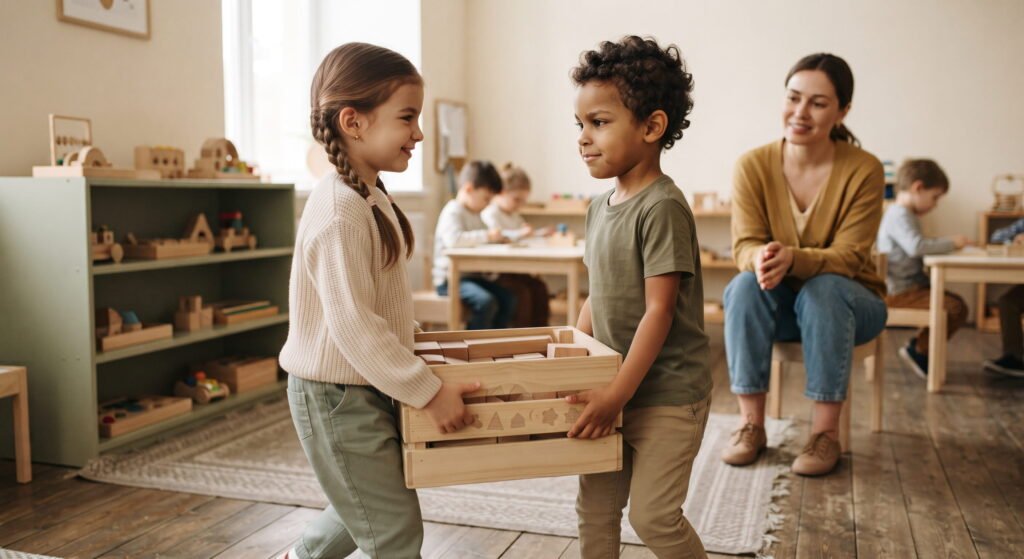
Inclusion means meaningful access, participation and belonging Inclusive early learning is not simply allowing every child through the door. It means learning who each child is, removing avoidable barriers, adapting environments and communication, protecting dignity and creating equitable ways to participate. Families, kaiako and relevant professionals work together around strengths

Read More »
Helping Children Become Familiar With Primary School Routines

Helping Children Become Familiar With Primary School Routines

Introduce real routines gradually while keeping adults responsible for support Children can become familiar with primary school routines by visiting the actual school, using accurate photos or maps, practising belongings and food containers, experiencing short group transitions and learning how to ask for help. Confirm every procedure with the receiving

Read More »
How Parents and Kaiako Can Work Together on School Readiness

How Parents and Kaiako Can Work Together on School Readiness

A strong partnership turns separate observations into one coherent pathway Parents and kaiako can support school readiness by sharing strengths, interests, culture, communication, practical capabilities and situations that still require support. Agree on a small number of meaningful goals, compare what happens across settings and involve the child. Share information

Read More »
Supporting Children’s Feelings and Worries About Starting School

Supporting Children’s Feelings and Worries About Starting School

Mixed feelings about school need listening, truth and dependable support A child can feel excited, worried, proud and sad about starting school at the same time. Listen without dismissing the feeling, give accurate information about the real school, name who can help and keep routines predictable. Use visits, stories, play

Read More »
Using Books and Role Play to Talk About Starting School

Using Books and Role Play to Talk About Starting School

Stories and pretend play turn an unknown school into something discussable Books and role play can help children explore starting school, ask questions and rehearse possible situations without claiming that every school day will look the same. Choose varied stories, connect them with current information from the actual school, let

Read More »
Early Numeracy Before School Without Pressure

Early Numeracy Before School Without Pressure

Early numeracy is useful mathematical thinking, not speed or pressure Before school, children can develop numeracy by counting for a reason, comparing quantities, sorting by different rules, noticing patterns, measuring, building and talking about space. Adults can introduce precise language and useful tools inside play and everyday tasks. Reciting numbers

Read More »
Early Literacy Before School Without Worksheets

Early Literacy Before School Without Worksheets

Early literacy grows from meaning, language and joyful participation Children build literacy foundations through conversation, shared books, songs, rhymes, storytelling, drawing, pretend play and print used for real purposes. Worksheets are not required. Adults can read responsively, value home languages, model writing, provide varied mark-making tools and notice symbols in

Read More »
Listening and Following Instructions: Building Skills Through Play

Listening and Following Instructions: Building Skills Through Play

Listening grows through attention, meaning and responsive relationships Children practise listening and following instructions through songs, movement games, stories, collaborative play and useful routines. Keep directions brief, gain the child’s attention, use visual or gestural support, allow processing time and check understanding without blame. Listening is not silent obedience: children

Read More »