

Treat the move to school as a gradual, connected pathway
Preparing for primary school works best when adults build familiarity, share useful information and protect the child’s sense of identity and competence. Visit the school, learn the real routines, practise a few purposeful self-help skills and keep early learning rich and playful. Avoid turning the final months of preschool into a rehearsal of worksheets or compliance.
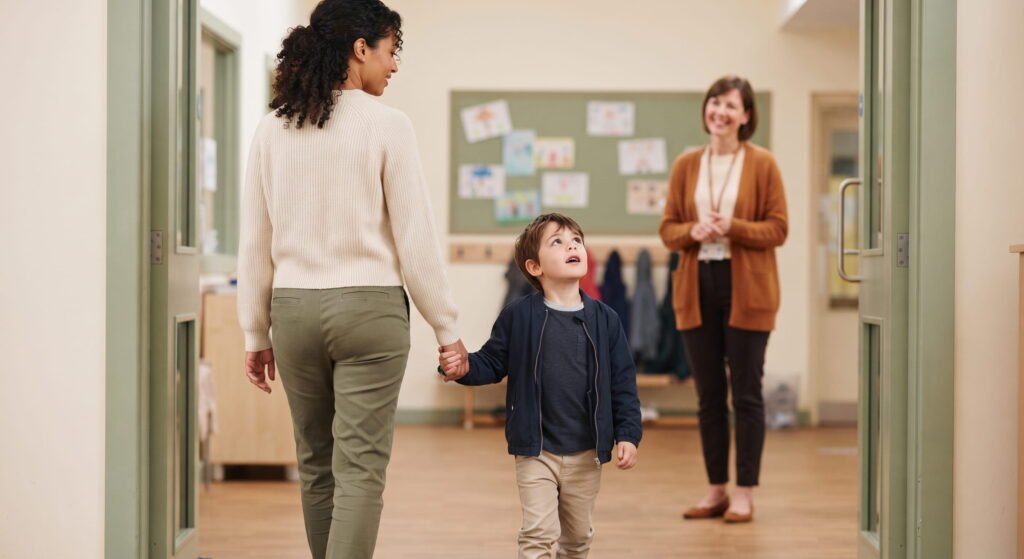
The transition from preschool to primary school is not one morning at the gate. It begins as children hear about school, notice older siblings, visit a classroom and imagine what the new place may be like. It continues after the first day while relationships, routes, routines and expectations become familiar.
A thoughtful plan connects three settings: home, early learning and the receiving school or kura. Each holds information the others need. Families know the child’s history, culture, daily life and responses to change. Kaiako know how the child participates in a group and approaches learning. The school knows its current people and procedures. Bringing those views together is more useful than guessing from a generic starting-school list.
Begin with facts about the actual school
Schools differ in visit schedules, class organisation, lunch systems, communication, uniforms, stationery, drop-off and support. Contact the receiving school for current information and attend opportunities offered to new families. Photographs of real places and names of real people are usually more helpful than vague statements about ‘big school’. If the child will attend kura, ask how language, tikanga and whānau participation shape the transition.
Create a small familiarity file
- A picture of the entrance and where the child will meet their adult
- The names and photographs the school has approved for sharing
- The route to the classroom, toilets and collection point
- What happens with bags, lunch and drink bottles
- One or two reassuring facts the child chose after a visit
Keep the file short enough to revisit easily. Correct it when arrangements change. Do not post photographs of other children or private school information online.
Use a three-phase transition plan
Phase one: connect and observe
Listen for what the child already thinks school will be like. Share interests, languages, friendships, comfort strategies and support needs with the adults involved. Ask the child’s early learning teachers which capabilities they see in everyday contexts. Record questions without trying to solve every uncertainty immediately.
Phase two: practise with purpose
Choose a few practical tasks that will genuinely help: opening food containers, identifying belongings, asking an unfamiliar adult for help or following a two-part routine. Practise inside ordinary family and centre life. A picnic can test lunch containers; an outing can involve carrying and checking a small bag. Adults should still assist when required.
Phase three: protect connection after the start
The first weeks may be exciting and tiring. Keep home routines as predictable as reasonably possible, allow decompression and ask open but manageable questions. Continue communication with the school and share new information with consent. Avoid demanding a full report immediately after collection; some children talk later through drawing, play or a quiet conversation. Watch for patterns across several days before deciding what one difficult afternoon means.
Preserve continuity of learning
Transition does not mean leaving early childhood learning behind. Interests in insects, construction, stories, maps, dance or family history can travel into school. Learning stories and family examples may help a new teacher understand how the child approaches challenge, communication and collaboration. Ask what information the school finds useful and what consent is required before records are shared.
Plan for the emotional load
A child can be eager and worried at the same time. Adults can acknowledge both without promising that every moment will be easy. Use concrete reassurance: who will take them, who can help, and when they will be collected. If distress is intense, prolonged or affecting daily life, discuss observations with the relevant professionals rather than relying on general online advice.
Keep belonging visible
Names, pronunciation, home languages, whakapapa, culture, disability identity and family structures should not disappear at the school gate. Tell the school what is important and ask how identity will be affirmed. A child is more likely to participate when they do not need to set aside who they are in order to fit the new environment.
Coordinate with the Childsplay Unlimited team
Talk with Mt Roskill or Kingsland about the receiving school, what the child has noticed and which next steps matter to your family. Ask for current centre examples and how Storypark or other documentation may support a transition conversation. Any sharing must respect consent and privacy. Because centre programmes and school connections can differ, verify arrangements with the team your child attends.
A final week that stays calm
- Confirm the first-day instructions directly with the school.
- Label and test the required belongings without making the child responsible for every detail.
- Revisit the collection plan and name the adults involved.
- Keep sleep and family rhythms as steady as practical.
- Plan a simple, low-pressure goodbye to preschool and welcome to school.
Preschool-to-school transition questions
Should we practise school every day?
No. A few purposeful experiences are enough. Continue ordinary play, relationships, rest and family life rather than turning each day into a rehearsal.
What information should preschool share?
Ask the school and centre. Strengths, interests, communication, strategies and family aspirations may be useful, but sharing should be relevant, respectful and consented.
What if the child changes schools before starting?
Update the familiarity information and contact the new school. Acknowledge disappointment or uncertainty and rebuild the plan around the actual setting.
Can transition take time after the first day?
Yes. Learning people, routines and expectations is an ongoing process. Continue support and review concerns with the school.
Contact Childsplay Unlimited
Plan the preschool-to-school pathway with people who know your child. Call Childsplay Unlimited Mt Roskill on 09 627 9041 or Kingsland on 09 846 8908 and ask the relevant team how it currently works with families during transition.