

School readiness is a broad foundation, not a worksheet score
School readiness includes wellbeing, belonging, communication, curiosity, relationships, self-help and confidence in unfamiliar situations. It is not a requirement that a child can already read, write or complete formal schoolwork. The strongest preparation connects home, early learning and the receiving school while recognising each child’s culture, strengths, pace and support needs.
When adults ask whether a child is ready for school, the conversation can quickly narrow to letters, numbers or how long the child can sit still. Those capabilities may be part of a much larger picture, but they are not a complete test. Starting school involves entering a new community, learning different routines, building relationships and carrying familiar ways of learning into an unfamiliar setting.
Te Whāriki treats learning as holistic and positions children as competent and confident learners. New Zealand transition guidance also emphasises relationships, identity, continuity of learning and a welcoming role for family and whānau. A useful readiness plan therefore asks what will help this particular child participate, communicate and feel that they belong—not whether every child can perform the same checklist on the same date.
Replace the single checklist with five connected foundations
- Wellbeing: the child can seek comfort, communicate needs and increasingly recover with support.
- Belonging: the child expects that their name, culture, language and family matter in the new place.
- Relationships: the child can form trust, join others in different ways and ask an adult for help.
- Communication: the child can share meaning through speech, home languages, gesture, sign, pictures or other methods.
- Exploration: the child is willing to wonder, make choices, test ideas and persist with manageable challenges.
These foundations overlap. A child who feels secure is more able to listen; a child whose communication method is understood can participate more confidently. Readiness should never be reduced to a ranking that ignores disability, neurodiversity, language background, temperament or different cultural expectations.
What readiness can look like in ordinary play
A construction project may involve planning, quantity, negotiation, persistence and explanation. Dramatic play may involve remembering a sequence, taking another perspective, using symbols and adjusting a story with peers. Preparing fruit, packing away or caring for equipment can involve responsibility and following a meaningful routine. These experiences build learning dispositions and practical capabilities without imitating a school lesson.
Notice strategies rather than polished performance
- The child tries another approach when the first one fails.
- They watch before joining and then find a workable entry point.
- They tell someone when instructions are unclear or help is needed.
- They contribute an idea and respond to another person’s idea.
- They use familiar knowledge in a new problem or setting.
Reading and writing do not have to be mastered first
Children benefit from books, songs, stories, drawing, mark-making, conversations and meaningful print before school. They also benefit from counting, sorting, building, comparing and pattern play. The aim is a rich foundation and positive learner identity, not early completion of school exercises. Pressure can obscure what a child understands, especially if the task depends on an unfamiliar language, fine-motor demand or willingness to perform for an adult.
Readiness belongs to the receiving environment too
It is unfair to locate the whole transition inside the child. A school or kura also prepares by learning about the child, building relationships, affirming identity, welcoming whānau and connecting with earlier learning. Parents can ask the school what visits, information sharing and support are available. Kaiako can help families identify useful questions, but current arrangements should be confirmed with the receiving school.
Start from strengths and identify the next useful support
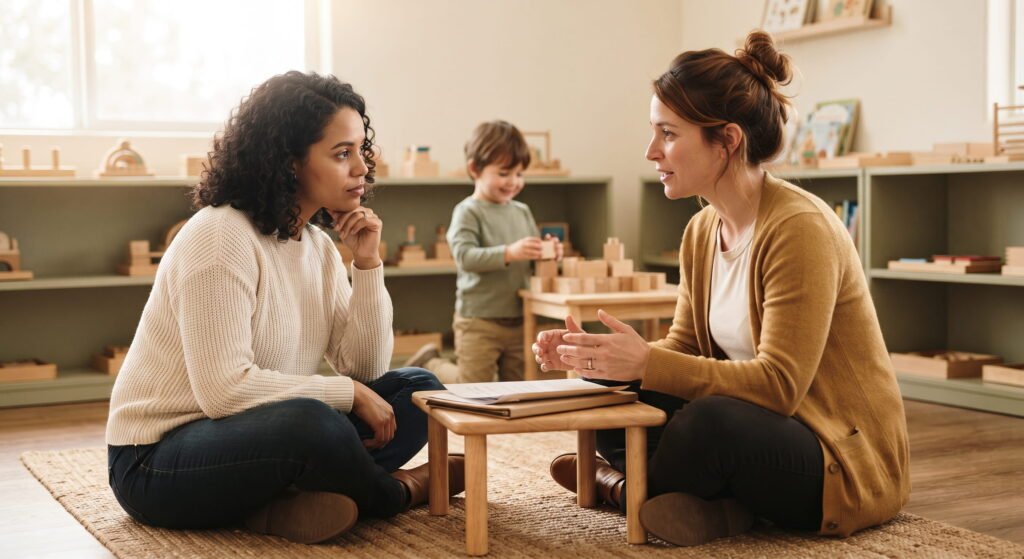
A strengths-based discussion might begin with what captures the child’s attention, how they communicate, who helps them feel safe and what strategies they already use. Adults can then choose a manageable next step, such as practising how to open a lunchbox, approaching a teacher, joining a short group experience or keeping track of a bag. The goal should have a real purpose and should not become a public test.
Questions families can bring to a transition conversation
- What does my child already do confidently across home and early learning?
- Which situations are unfamiliar or demanding, and what currently helps?
- How are our languages, culture and family aspirations represented?
- What information would help the new teacher understand our child quickly?
- Which practical details must we confirm directly with the school?
How Childsplay Unlimited can contribute
Families can talk with the relevant Mt Roskill or Kingsland team about observed strengths, interests, communication, independence and participation. Childsplay Unlimited uses Storypark, which may provide examples to support a conversation alongside direct discussion. Ask what transition support is currently available at the centre and how information is shared with consent. Do not assume both locations use identical activities or have the same relationships with nearby schools.
A better final question
Instead of asking, ‘Is my child ready?’ ask, ‘What relationships, information, experiences and adjustments will help my child enter this next place with confidence?’ That question keeps responsibility shared and turns readiness from a verdict into a planned pathway.
School readiness: common parent questions
Does my child need to read before starting school?
No. Enjoying books, conversation, stories, songs, symbols and mark-making can build strong foundations. Ask the receiving school how early reading is introduced.
Is sitting still the main readiness skill?
No. Children need movement and active learning. They may gradually participate in short group experiences while also learning how to ask for movement, clarification or help.
What if development is uneven?
Uneven profiles are common. Share specific strengths and support needs, seek qualified advice where appropriate and plan adjustments with the relevant people rather than waiting for every capability to match.
When should transition planning begin?
Begin early enough to build familiarity without creating months of pressure. The useful timing depends on the child, family, centre and receiving school.
Contact Childsplay Unlimited
Discuss your child’s strengths and transition questions with Childsplay Unlimited. Call Mt Roskill on 09 627 9041 or Kingsland on 09 846 8908 to arrange a visit and ask the relevant team what school-transition support is currently available.