


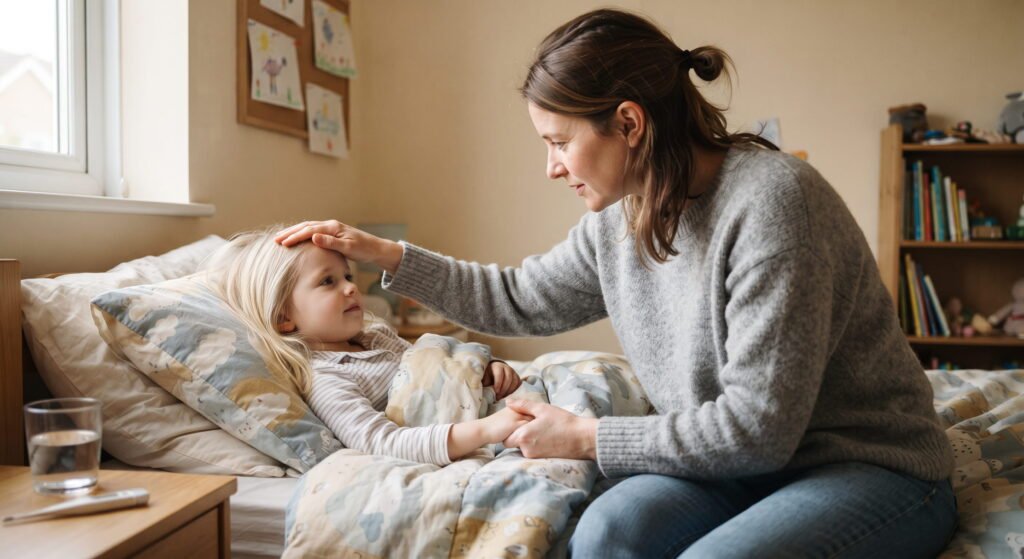
Keep a child home when current health guidance or the centre’s policy says exclusion is needed
There is no single symptom rule that safely answers every illness question. Contact the centre, follow its current illness policy and use current public-health or qualified medical advice. Keep children home when they cannot participate comfortably, need care the centre cannot provide or may expose others contrary to guidance. Urgent or severe symptoms require appropriate medical help, not a blog.
A mild symptom can have several causes, while a familiar illness may change quickly. Parents also have to consider the child’s comfort, the needs of the group and the centre’s ability to provide care. That is why a static online list should not replace current advice or an individual assessment.
Licensed early learning services have criteria for responding to infectious illness, and Ministry licensing material includes a schedule of infectious diseases. Centre policies may also explain exclusion, notification and return requirements. Families should ask Childsplay Unlimited Mt Roskill or Kingsland for the current policy and use Health New Zealand or qualified clinical advice when the situation requires it.
Use a four-part decision check
- Current guidance: does public-health, medical or centre advice require exclusion?
- Participation: can the child comfortably take part in the normal programme?
- Care: does the child need one-to-one monitoring or care the centre cannot safely provide?
- Transmission: could attendance expose others contrary to current advice?
If the answer is unclear, contact the centre before arrival and seek qualified health advice where needed. Do not send the child and hope staff can decide later.
Look at the whole child, not one temperature or symptom
Energy, breathing, hydration, pain, rash, alertness, sleep, vomiting, diarrhoea and the ability to eat or join normal activity may all matter. A child can be unwell without a dramatic fever, and a number alone cannot identify the cause. This article does not provide diagnostic thresholds. Use current professional advice.
Participation is a practical question
Early learning includes active play, group routines, meals, rest and transitions. A child who needs to be held continuously, cannot manage normal activity or is significantly distressed may need home care even when a named exclusion rule is not obvious. Explain the child’s actual condition rather than asking the centre to judge from a label.
Information to give the centre
- When symptoms began and how they have changed
- Any diagnosis or advice from a qualified health professional
- Whether the child has attended while potentially infectious
- Medication given and any required documentation
- The best current contact and collection plan
Prepare for collection if illness develops during the day
Keep phone numbers current and name authorised backups. If the centre calls, ask what staff have observed and follow the collection process promptly. The service may need to separate an ill child from the group while maintaining comfort and supervision. Parents should not ask staff to conceal symptoms or delay action to fit a work schedule.
Return depends on recovery and current requirements
Before returning, check the centre’s policy and any public-health or medical advice. Some conditions have specific exclusion or clearance requirements; others depend on the child being well enough to participate. Tell the centre if symptoms persist or a diagnosis changes. Do not use medicine simply to mask a symptom so attendance appears possible.
Protect privacy while sharing necessary information
The centre may need to inform other families about exposure without identifying the child. Parents should share relevant facts privately and avoid naming another child or speculating in group chats. Health information should reach the people who need it through appropriate channels.
Illness planning for recurrent or chronic conditions
- Explain the child’s usual presentation and what is different today.
- Provide a current individual health or action plan where required.
- Clarify which symptoms need urgent action or parent contact.
- Authorise and supply medicine through the centre’s process.
- Review the plan after changes in diagnosis, treatment or response.
Hygiene reduces risk but cannot prevent every illness
Hand hygiene, cleaning, ventilation, safe nappy changing and appropriate food practices contribute to infection control. Young children still share spaces and are developing self-care skills. A centre should not promise that illness will never spread. Families can ask how hygiene and illness response work together.
Plan for the practical impact of a home day
Before illness occurs, identify who can collect, who can provide care at home and how work or study contacts will be notified. Keep the authorised backup list current and make sure the person understands the centre’s collection process. A realistic plan reduces pressure to send a child who is not ready to attend or to delay collection after staff report a health concern.
Know when to seek urgent help
Severe breathing difficulty, reduced responsiveness, a serious allergic reaction or another urgent concern requires immediate emergency or qualified medical help. Do not wait for an email response or rely on general internet content. Follow New Zealand emergency and health advice.
Contact the relevant Childsplay centre
Ask Mt Roskill or Kingsland for its current illness and return policy before your child starts. Procedures and public-health advice can change. Save the centre’s phone number and make sure authorised collectors can respond if the child becomes unwell.
Childcare illness and staying home: FAQs
Can this article tell me whether one symptom requires exclusion?
No. Use the centre’s current policy and current public-health or qualified medical advice.
Should a child attend if medicine hides the symptom?
Do not use medicine to make an unwell child appear able to attend. Follow medical guidance and the centre’s policy.
What if my child becomes ill at childcare?
Keep contacts current, respond promptly and follow the centre’s authorised collection and health procedures.
When can a child return?
Return when current exclusion guidance, the centre’s policy and the child’s ability to participate support it. Confirm individual circumstances.
Contact Childsplay Unlimited
Ask Childsplay Unlimited for the current illness policy before you need it. Call Mt Roskill on 09 627 9041 or Kingsland on 09 846 8908 to confirm reporting, collection and return procedures for the relevant centre.