


Key Takeaways / TL;DR
- Active supervision means kaiako stay aware, position themselves thoughtfully and respond as children’s play and needs change.
- Good supervision balances a view of the group with close attention to individual children, spaces, routines and transitions.
- Families can ask how a centre plans supervision indoors, outdoors, during sleep and meals, and when children move between areas.
What active supervision in early learning means
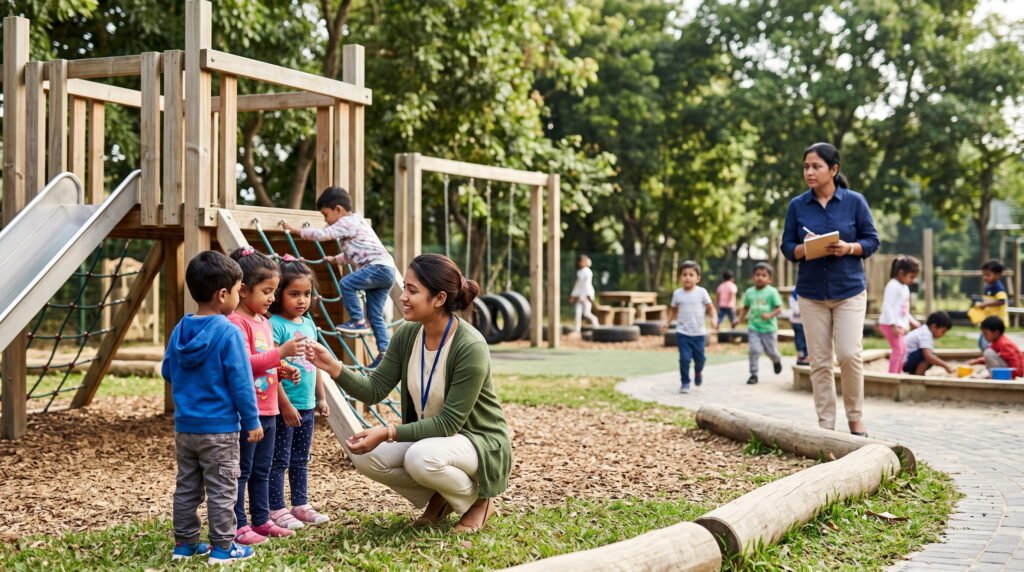
Active supervision in early learning is the purposeful attention kaiako give to children throughout the day. It combines being present and engaged with noticing what is happening across the group. Teachers position themselves so they can observe, listen, anticipate what may happen next and respond promptly when a child needs support or a situation changes.
Supervision is more than counting heads or standing near the play. Children explore, move between spaces and take different levels of risk as they learn. Kaiako need to know who is present, understand the activity and environment, and adjust their attention to children’s ages, abilities, interests and support needs.
For families choosing an early learning service in Auckland, it is reasonable to ask how this works in everyday practice. Childsplay Unlimited has centres in Mt Roskill and Kingsland; ask the relevant team about the particular spaces, routines and supervision arrangements at the centre you are considering.
How kaiako put active supervision into practice
Position for a useful view
The layout of a room, outdoor area or activity affects what an adult can see and hear. Kaiako can choose positions that allow them to notice children while still joining play and supporting learning. They may move as children move, especially where equipment, corners, doors or changes in level create less visible areas. A position that worked a few minutes ago may no longer be useful after the group changes.
Scan, listen and check who is present
Attentive supervision uses sight and sound together. Kaiako look across the space, listen for changes in tone or activity and remain aware of children who are quieter or temporarily out of view. Regular checks of attendance and transitions help the team know which children are in each area. These checks support supervision; they do not replace it.
Anticipate what may happen next
Knowing the activity helps kaiako notice when a situation may need support. This could mean staying near a new climber, adjusting the space when children gather around a resource, or preparing for a busy transition. The aim is to respond early and proportionately while allowing children room to investigate, practise skills and make choices.
Engage while staying aware of the group
Warm interaction is part of quality care and learning. A teacher can talk with a child, model language or help solve a problem while keeping awareness of the other children nearby. Teams can communicate and reposition so attention is shared across the group, rather than assuming one adult can see every space from a single spot.
Supervision changes with the space and routine
Different parts of the day call for different plans. Indoor and outdoor areas have different layouts and equipment. Meals, sleep, toileting, excursions, visitors and arrival or collection each bring their own practical considerations. A service’s supervision approach should account for the premises, the children attending and the activities taking place.
Transitions deserve particular attention. When children move between rooms or outdoors, kaiako need a clear way to know who is moving, who has arrived and whether anyone needs help. Families can ask how staff coordinate during these moments and how information is shared when a child needs an individual support plan.
Active supervision should support children’s wellbeing and growing independence. It does not mean interrupting every challenge or preventing all manageable risk. Kaiako use their knowledge of each child and the environment to decide when to observe, encourage, redirect or step in.
What families can ask a childcare centre
A visit is a useful time to ask open, practical questions. For example:
- How do kaiako position themselves to supervise the indoor and outdoor areas?
- How does the team know which children are in each space during transitions?
- How is supervision adjusted during meals, sleep, toileting or busy periods?
- How do staff share responsibility when children are engaged in different activities?
- How are a child’s individual needs or support plan included in the team’s approach?
- Who should I speak with if I have a concern or notice something that needs clarification?
Look for clear, calm explanations that relate to the centre you are visiting. The details should reflect its actual rooms, outdoor spaces, routines and enrolled children rather than a generic promise.
New Zealand requirements and current guidance
Centre-based early learning services in New Zealand must be licensed and comply with the Education (Early Childhood Services) Regulations 2008 and applicable licensing criteria. The Ministry of Education’s current requirements for early childhood education and care centres link to the centre-based criteria and explain the regulatory framework. The criteria were updated on 1 September 2026, and the Ministry page notes that the Education Review Office is responsible for licensing and regulating early learning services from that date.
This article offers general information for families. It is not a substitute for a service’s specific supervision plan or official regulatory guidance. If you need to understand a particular practice, ask the centre directly and consult the current Ministry and ERO information.
Active supervision in early learning: FAQs
What does active supervision mean in an early learning centre?
It means kaiako purposefully stay aware of children, the activity and the environment, position themselves thoughtfully, and respond as needs or conditions change.
Does active supervision mean a teacher watches every child every second?
Supervision is continuous and planned, but the practical approach changes with the space, routine and group. Teams use positioning, communication and checks to maintain awareness while supporting children’s learning and care.
How can parents ask about supervision during a centre visit?
Ask how staff cover indoor and outdoor areas, manage transitions and routines, and adapt the approach for children’s individual needs. Invite the team to explain using the actual spaces you are visiting.
Where can I find New Zealand’s current centre-based requirements?
The Ministry of Education’s centre requirements page links to the current licensing criteria and explains the regulatory framework. ERO provides current licensing and regulatory information for early learning services.
Talk with Childsplay Unlimited
Ask the Mt Roskill or Kingsland team how supervision works in the spaces and routines that matter to your child. Call Mt Roskill on 09 627 9041 or Kingsland on 09 846 8908 to arrange a visit or discuss your questions.