

Inclusion means meaningful access, participation and belonging
Inclusive early learning is not simply allowing every child through the door. It means learning who each child is, removing avoidable barriers, adapting environments and communication, protecting dignity and creating equitable ways to participate. Families, kaiako and relevant professionals work together around strengths and needs, while the child’s culture, language, identity and preferred communication remain visible.
An early learning environment may look welcoming and still be difficult for a child to use. The room may be too noisy, the instructions may depend only on speech, the resources may be physically out of reach or group routines may allow just one way to participate. Inclusion becomes real when adults notice those barriers and change the conditions, rather than expecting the child to overcome every obstacle alone.
Te Whāriki is intended as a curriculum for all children and emphasises empowerment, holistic development, family and community, and relationships. Inclusive practice therefore belongs throughout the curriculum. It is visible in arrival, care, play, communication, meals, rest, transitions and the way adults interpret behaviour—not confined to a special activity or a support person’s visit.
Begin with the adult view of the child
A child described mainly through deficits is likely to receive narrower opportunities. A strengths-based view does not deny difficulty; it asks what the child is communicating, what they can already do, what conditions support participation and which barrier is getting in the way. Descriptions should remain specific and revisable. ‘Needs a picture cue before group transitions’ is more useful than ‘cannot cope with change’.
Look for four dimensions of inclusion
- Access: the child can reach, understand and use the people, spaces, communication and materials.
- Participation: the child has a meaningful role rather than being present only as an observer.
- Belonging: the child and whānau see their identities, languages and relationships respected.
- Learning: adults notice strengths, offer challenge and adapt support so capability can grow.
A change may support several dimensions at once. A visual choice board can improve communication, reduce uncertainty and give the child more control. A quieter space can support regulation while still remaining connected with the group.
Equity is not identical treatment
Giving every child the same tool or instruction may look fair but create unequal access. One child may use a thicker handle, another may stand for a story, and another may communicate through signs or pictures. The learning purpose can remain shared while the route into it differs. Adaptation should not automatically lower expectations; it should remove demands that are unrelated to the meaningful goal.
Questions that reveal the real learning purpose
- Is the goal to communicate an idea or to hold one specific pencil?
- Is the goal to contribute to the story or to sit in one posture?
- Is the goal to cooperate or to speak in front of the whole group?
- Is the goal to explore movement or to use one piece of equipment?
- Which part is essential, and which part can change?
Relationships carry the adaptation
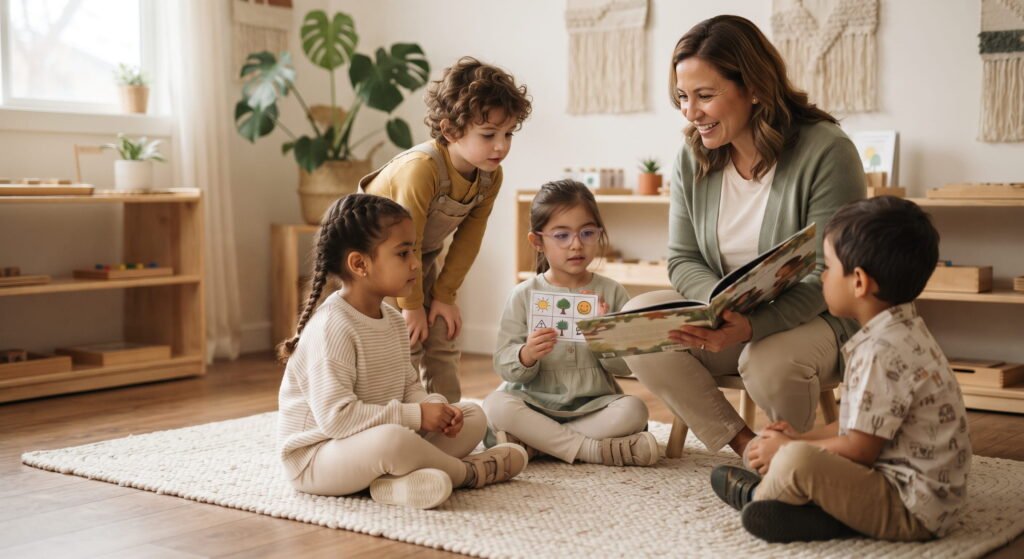
Equipment alone does not create inclusion. A trusted adult observes cues, waits for a response, notices discomfort and learns the child’s communication. Peers also need guidance that protects dignity: adults can model how to wait, offer a choice or include another method without appointing one child as a permanent helper. The child should retain agency within support.
The environment can reduce barriers before they appear
Clear pathways, predictable storage, varied seating, manageable sound, visual information and resources at usable heights can help many children without identifying anyone publicly. Inclusive design should still preserve challenge, creativity and rich play. The goal is not a bare, risk-free room; it is an environment where children can anticipate, explore and contribute with appropriate support.
Family knowledge is curriculum knowledge
Families can explain names, culture, home languages, interests, care routines, sensory preferences, communication and strategies that already work. Kaiako can share how those strengths appear in a group. When professional recommendations exist, agree on which information is relevant and how it will be used. Consent and privacy are not administrative extras; they protect trust.
Signs of inclusion during a centre visit
- Adults describe children through strengths and specific observations.
- Materials and routines allow more than one form of participation.
- Children’s names, languages, cultures and families are represented accurately.
- Teachers can explain how they review an adaptation rather than promising a fixed formula.
- Questions about support are welcomed without diagnosing or guaranteeing an outcome.
Ask each Childsplay location for current examples
Mt Roskill and Kingsland may have different spaces, group dynamics, resources and staff expertise. Ask the relevant team how it learns about individual children, changes an environment and works with families or specialists. A current example is more informative than a general promise. Discuss your child’s actual needs before deciding whether the available setting and support are a suitable match.
Inclusion is an ongoing practice
Needs and environments change. An adjustment that works during quiet play may not work at a busy transition, and a child may need less or different support as familiarity grows. Inclusive teams observe, discuss, adapt and review. They do not require the child to fail repeatedly before reconsidering the conditions.
Inclusive early learning: parent FAQs
Does inclusion mean every child does the same activity?
No. Children can share a learning purpose while using different materials, communication, timing, roles or support.
Are adaptations unfair to other children?
Adaptations create equitable access. Many supports, such as visual routines and clear pathways, can benefit the whole group.
Can a centre guarantee every type of support?
Families should discuss actual needs, current capacity, specialist involvement and practical arrangements with the relevant centre. Avoid relying on a generic guarantee.
How often should support be reviewed?
Review whenever needs, goals or conditions change and at agreed intervals. Use observations from the child, family, teachers and relevant professionals.
Contact Childsplay Unlimited
Explore inclusive practice at Childsplay Unlimited. Call Mt Roskill on 09 627 9041 or Kingsland on 09 846 8908 to arrange a visit, share relevant information and ask the team at that centre for current examples of equitable participation.