
Partnership is visible when family knowledge changes practice
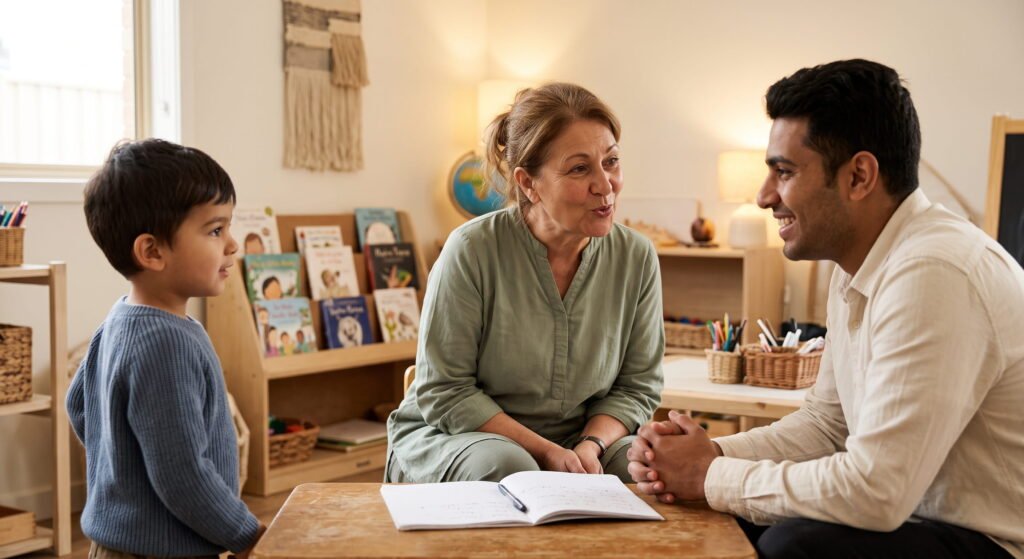
A strong early learning partnership is two-way: Families share knowledge, languages, values and aspirations; kaiako share observations, care information and curriculum thinking; both listen, clarify and review what supports the child. Partnership does not require agreement on every detail. It requires respectful communication, clear responsibilities and evidence that family contributions genuinely influence the child’s experience.
Families know the child across relationships, history and home. Teachers know the child in an early learning group, across routines and in sustained play. When those perspectives meet respectfully, adults can form a fuller picture of strengths, needs and possibilities.
Te Whāriki describes learning as woven together by kaiako and whānau. The metaphor matters because partnership is not an occasional event added to the programme; it influences belonging, assessment, care and decisions throughout the child’s time at the centre.
A welcome should invite knowledge, not only information
Enrolment forms collect essential facts, but partnership begins when the centre asks what the family values, how names are pronounced, which languages matter, what comforts the child and what hopes shape the decision. Families should also hear an honest explanation of the centre’s philosophy, routines and boundaries so participation begins from shared understanding.
Aspirations become useful when they are specific
A family may hope the child grows in confidence, maintains a home language, forms friendships or develops independence. Teachers can ask what that looks like in daily life and share what they observe. Broad ambitions become actionable when adults identify experiences, words and relationships that support them without turning childhood into a checklist.
Questions that open an aspiration conversation
- What does your child currently enjoy or return to?
- Which family, cultural or language knowledge should be visible here?
- What would help your child feel that they belong?
- What capability would you like us to notice and support?
Teachers contribute professional observation
Partnership does not mean the centre simply follows every preference. Kaiako bring curriculum knowledge, group observations, safety responsibilities and experience. They can explain what they noticed, why it may matter and how the programme could respond. Families can question or add context. Respectful expertise is shared rather than performed over one another.
Everyday care is partnership territory
Sleep, food, toileting, comfort and transitions involve family knowledge and centre procedures. A useful partnership distinguishes individual information from rules the centre must maintain. Adults discuss what can be adapted, what cannot and why. When an arrangement changes, the current version is recorded instead of depending on memory.
Disagreement can be handled without damaging trust
Start with the shared concern, then separate facts, observations and assumptions. Ask who decides the next step and when it will be reviewed. If the issue involves policy, safety or a complaint, use the centre’s formal process. Partnership is strengthened by fair resolution, not by pretending disagreement never occurs.
Home languages deserve more than decorative words
Families can provide pronunciation, songs, stories, names and the meanings behind cultural practices. Teachers can use these contributions in relationships and curriculum rather than displaying isolated vocabulary. Te Whāriki guidance notes that communication in home languages can foster family partnership. Ask how the centre learns to use languages it does not yet know well.
Learning stories can become shared assessment
A teacher’s Storypark post may document an interest or capability; a family response may reveal history or a home connection. The child may add their own explanation. These contributions help adults recognise valued learning and plan what to revisit. The story is strongest when it remains open to dialogue rather than presenting one final interpretation.
Representation should reach different families
Work schedules, digital access, language, confidence and family structure affect participation. Centres can offer more than one route: handovers, Storypark, planned meetings, celebrations, translated information or contributions from extended whānau where appropriate. Equality is not always one identical channel; it is meaningful access with privacy and consent.
Roles and boundaries protect the relationship
Families keep contact, health and collection information accurate and communicate relevant changes. Centres provide safe care, protect confidentiality and explain procedures. Both use respectful channels and avoid discussing another child’s private information. Clear boundaries make collaboration more dependable because people know how to act when an issue is urgent, sensitive or unresolved.
A partnership health check
- Can the family identify who to contact for care, learning and enrolment matters?
- Do teachers know important family aspirations and pronunciations?
- Can both sides give an example of information influencing practice?
- Are digital, doorway and private conversations used for the right purposes?
- Is there a clear path for questions, disagreement and review?
What partnership looks like to the child
The child sees family knowledge welcomed, hears important names and languages treated with care and experiences adults exchanging information calmly. They do not need every adult to act identically. They benefit from a coherent message that home and centre both know them, value their identity and can work together when something changes.
Begin the partnership during the centre visit
Ask Mt Roskill or Kingsland how families contribute to curriculum, receive routine information, use Storypark and arrange private discussions. Share one real aspiration and notice the questions the team asks in return. Confirm operational details at the specific centre. A partnership promise becomes credible when it is supported by examples, channels and follow-through.
Family partnership in early learning questions
What can families contribute to curriculum?
Languages, cultural knowledge, interests, family stories, aspirations and observations from home can all inform teaching and assessment.
Does partnership mean parents decide everything?
No. Families and kaiako contribute different knowledge, while centres retain professional, legal and safety responsibilities.
How can concerns be raised?
Start with the appropriate teacher or centre leader and use the centre’s formal process when the matter needs escalation or documentation.
Can extended whānau participate?
Often yes, with guardian consent and within privacy and centre procedures. Ask what options are available.
Contact Childsplay Unlimited
Start a family partnership conversation with Childsplay Unlimited. Contact Mt Roskill on 09 627 9041 or Kingsland on 09 846 8908 to arrange a visit, share your aspirations and ask how families contribute to centre life.