


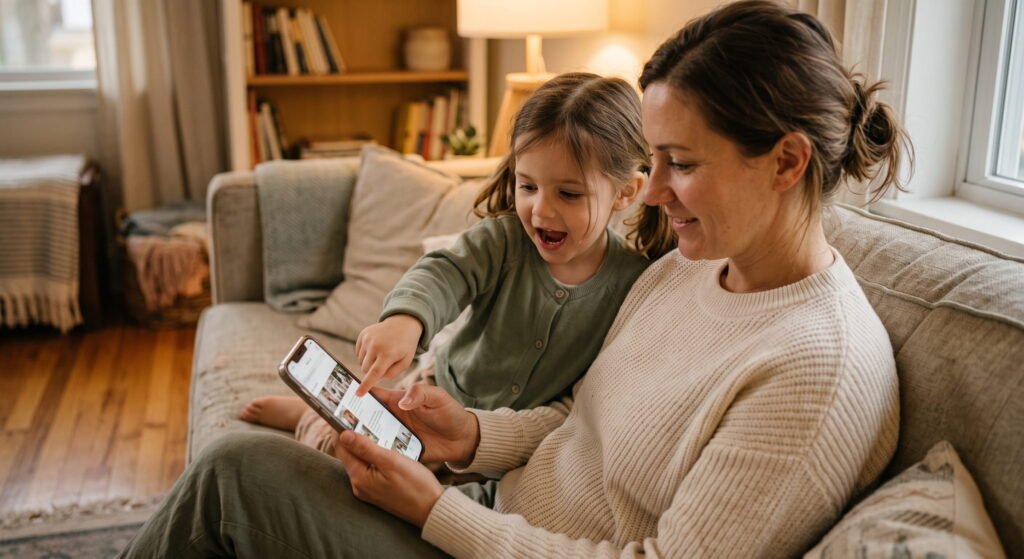
Storypark can extend the relationship beyond the doorway
Storypark can help families stay connected through photos, videos, learning stories, observations and responses in a private online environment. At Childsplay Unlimited it complements—not replaces—direct conversations and urgent communication. Families should ask what each centre posts, who can access information, how consent and privacy are handled and which matters need another channel.
A digital update can give parents a window into experiences they do not see firsthand. A photo of a structure, a teacher’s interpretation and a family comment may connect home interests with curriculum planning. The value lies in the conversation around learning, not the quantity of notifications.
Storypark describes learning stories as a narrative way to record and communicate learning and development, potentially using images, video or audio. Childsplay Unlimited uses Storypark, but families should confirm the current practice at the centre their child attends.
A learning story is more than a photo caption
A useful story may describe what the child attempted, why it mattered, strengths or interests that were visible and possible next steps. Te Whāriki assessment guidance includes noticing, recognising, responding, recording and revisiting valued learning. The image can draw attention, but the interpretation and family knowledge help turn a moment into an ongoing learning conversation.
Families can add context from home
A parent might explain that the child has been building similar structures, name a home-language word, identify a family connection or share what happened next. This response helps teachers understand the experience in a wider life. Families do not need to produce long educational comments; specific, genuine information is useful.
Four ways to respond meaningfully
- Name a connection the child made at home
- Add the child’s own explanation or remembered words
- Share relevant family, cultural or language knowledge
- Ask a focused question about what the teacher noticed
Routine updates and learning stories have different jobs
Families may need practical information about sleep, meals, toileting or wellbeing as well as learning documentation. Ask which information appears in Storypark, what is shared verbally and what is recorded elsewhere. A beautiful learning story does not replace a required health message, and a list of routines does not explain the richness of learning.
Privacy starts with access and consent
Storypark states that it provides a password-protected private space and that primary guardians control access to a child’s information. Families should still understand the centre’s consent process, who is invited, how group images are handled and what they should do if access needs to change. Use individual logins rather than sharing passwords casually.
Digital respect belongs to the family too
Parents and authorised users should treat other children’s images and information with care, follow the centre’s expectations and avoid redistributing content without permission. Ask the centre for its current digital and social-media guidance rather than assuming private access permits public sharing.
Urgent information needs an urgent channel
A Storypark post or message may not be read immediately. Changes to collection, medication, serious health information or urgent concerns should use the centre’s required direct channel. Ask when to phone, when to speak to a teacher and what can wait for digital communication. Good systems make the channel explicit.
More posts do not automatically mean better partnership
Teachers need time to be present with children, observe and plan. A smaller number of thoughtful stories may reveal more than constant generic photos. Families can ask how the centre decides what to document and how children who are less visually noticeable remain represented. Quality includes equity, meaning and connection over time.
Learning can be revisited with the child
Parents may look at a story with the child, listen to what they remember and bring that account back to teachers. Children can revisit achievements, revise their explanation or plan a next step. Avoid demanding that a child perform the story on command. The aim is shared attention and memory, not testing.
Set up access carefully during enrolment
- Confirm the correct guardian email and invitation process.
- Read the centre’s consent, privacy and appropriate-use information.
- Decide which authorised family members need access.
- Ask which updates appear digitally and which require direct contact.
- Review access when family circumstances change.
What to ask Childsplay Unlimited
Ask Mt Roskill or Kingsland how frequently families can expect different types of update, how parents contribute, who answers technical access questions and how sensitive matters are handled. The centres may share the same platform while using it in locally responsive ways, so obtain the current explanation from the centre your child attends.
Use Storypark as one strand of communication
The strongest connection combines digital stories, daily handovers, planned private conversations and the child’s own communication. Each channel has strengths and limits. When families and teachers contribute relevant information through the right channel, the child’s learning can be understood across home and early learning rather than as two separate stories.
Technical access problems should not block partnership
If an invitation expires, a guardian changes email address or notifications stop, contact the centre rather than creating duplicate accounts. Ask who manages access and how identity is confirmed. While the issue is resolved, important care and safety information must continue through the centre’s direct channels. Digital inclusion may also require help with language, confidence or device access. A strong communication system notices when a family is not receiving information and offers a practical route back into the conversation.
Storypark and childcare communication questions
What can a Storypark learning story include?
Storypark says stories may include progress, images, video or audio and information about strengths, interests and needs.
Does Storypark replace pick-up conversations?
No. Direct handovers remain important, and urgent or sensitive matters need the centre’s required channel.
Who can see a child’s information?
Storypark describes a private password-protected space with access granted by primary guardians. Confirm the centre’s current consent and invitation process.
Should parents comment on every story?
No. Specific home connections or questions are useful when genuine; meaningful participation matters more than response volume.
Contact Childsplay Unlimited
Ask how Storypark is used at the Childsplay Unlimited centre relevant to your family. Call Mt Roskill on 09 627 9041 or Kingsland on 09 846 8908 to discuss enrolment, communication and current access arrangements.