

Wellbeing is protected through responsive everyday practice
Mana atua | Wellbeing concerns children’s health, emotional security, safety, resilience and growing self-care. It can be seen in warm relationships, calm routines, responsive attention, suitable challenge and respect for cultural understandings of hauora. Strong practice neither removes every difficulty nor expects children to manage needs without dependable adult support.
Wellbeing in early learning is not a separate programme that begins with a feelings poster and ends with exercise. It is shaped by what happens when a baby signals tiredness, a toddler attempts to wash their hands, a child worries about saying goodbye or a climber pauses to judge the next step.
Te Whāriki describes Mana atua as protecting and nurturing children’s health and wellbeing. For parents, that makes ordinary interactions an important source of evidence when evaluating a centre.
Security begins with being known
Children gain confidence when adults learn their cues, preferences, relationships and ways of seeking comfort. For an infant, sensitive responses to gaze, gesture, hunger or tiredness are central. Older children also need adults who notice when behaviour is communicating uncertainty or overload. Being known does not mean every routine can remain exactly like home, but family knowledge should inform thoughtful and respectful care.
Physical, emotional, social, cultural and spiritual dimensions connect
Official guidance presents wellbeing as multifaceted and encourages awareness of Māori approaches such as Te Whare Tapa Whā. A narrow view focused only on avoiding illness misses identity, belonging, relationships and wairua. Centres should listen to how diverse whānau understand wellbeing and avoid assuming that one routine, display or emotional vocabulary suits everyone.
Wellbeing can be visible in small moments
- A kaiako explains a care routine and responds to the child’s signals.
- A child can ask for water, rest, comfort or help in a way others recognise.
- Quiet and active spaces allow different forms of participation.
- Adults acknowledge feelings while keeping boundaries calm and clear.
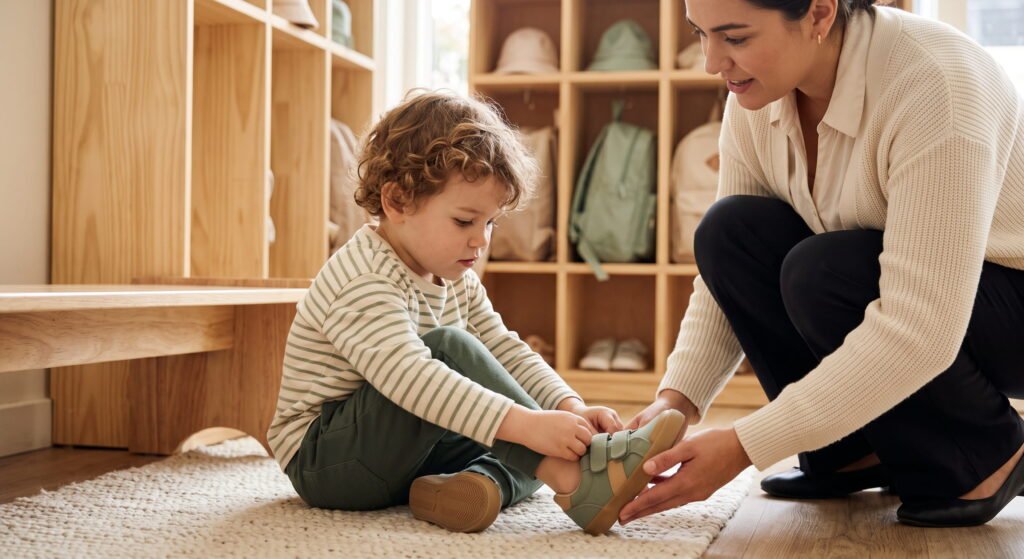
- Children receive time to practise manageable self-care tasks without shame.
Predictability supports confidence during change
Familiar welcomes, warnings before transitions and dependable adult responses help children anticipate what comes next. Predictability is not inflexible scheduling. Responsive routines may change for hunger, sleep, culture, disability, a difficult morning or a group event. The important pattern is that the child experiences adults as trustworthy and explanations as meaningful.
Emotional regulation grows in relationship
Young children do not learn to manage strong feelings simply by being told to calm down. Adults may reduce stimulation, stay near, name what they observe, protect others and offer a familiar strategy. Over time, children build ways to communicate needs and recover from challenge. Expectations should reflect age and individual development rather than demanding adult self-control from a preschooler.
Self-care should strengthen competence, not hurry
Eating, dressing, toileting, handwashing and caring for belongings can support independence when children have enough time and suitable help. A teacher might break a task into steps, adapt equipment or wait while a child tries. Completing the job quickly for every child can remove learning; withholding help can create frustration or embarrassment. The balance changes with each child and day.
Safety and challenge belong in the same conversation
Wellbeing includes protection from harm, but Te Whāriki also recognises children’s growing ability to take risks. A suitable climbing challenge, unfamiliar material or new social role may involve uncertainty that builds judgement and resilience. Adults remain responsible for hazards, supervision and adapting expectations. Productive challenge is intentional and supported, not a justification for preventable danger.
Questions to ask about a centre’s wellbeing practice
- How do you learn each child’s care cues and family routines?
- What happens when a child is distressed or needs a quieter space?
- How are health, allergy, sleep and dietary details kept current?
- How do children practise independence while receiving appropriate help?
- How do you distinguish manageable challenge from an unacceptable hazard?
Wellbeing information must be handled with care
Parents and kaiako need to exchange health and wellbeing information, but not every detail belongs in a public learning story or casual group conversation. Centres should use their current privacy, record-keeping and escalation procedures. Families can ask who has access, how urgent information is communicated and when consent is required. Respecting confidentiality protects dignity and makes it easier to raise concerns honestly. If circumstances change, update the relevant centre promptly rather than assuming an earlier enrolment form still describes the child’s needs.
Family communication protects continuity
Changes at home, sleep patterns, health needs or new comfort strategies may affect a child’s day. Centres also need to communicate significant observations and follow current procedures. Childsplay Unlimited uses Storypark, but an online post is not a substitute for an urgent or sensitive conversation. Ask how the relevant centre shares routine information and handles matters that require privacy.
Avoid reading one difficult moment as the whole story
A child can cry at separation and still develop secure relationships. Another may appear cheerful during a short tour but need substantial support later. Look for patterns across time, teacher responsiveness and the child’s growing ability to seek help, participate and recover. Wellbeing is not constant happiness; it includes having needs taken seriously while building confidence through experience.
Confirm the practices that apply to your child
Mt Roskill and Kingsland have different operating hours and may organise current routines differently. Discuss your child’s age, care needs, communication, culture and attendance pattern with the centre directly. Ask for current information rather than relying on a general article to describe an individual plan.
Mana atua and child wellbeing: FAQs
Does wellbeing mean children should never be upset?
No. Strong feelings are part of childhood. The key is responsive support, emotional safety and growing ways to communicate and recover.
How does wellbeing connect with culture?
Families may understand health, care, independence and spiritual wellbeing in different ways. Respectful partnership helps the centre respond appropriately.
Is manageable risk part of wellbeing?
Yes, when adults provide suitable challenge, supervision and safe conditions. Hazards that children cannot reasonably judge still require adult action.
What should I share before my child starts?
Discuss comfort, sleep, food, health, allergies, communication, toileting, culture and any support strategies relevant to your child.
Contact Childsplay Unlimited
Discuss your child’s wellbeing with the Childsplay Unlimited centre you are considering. Call Mt Roskill on 09 627 9041 or Kingsland on 09 846 8908 to arrange a visit and confirm current care routines, communication and transition planning.