

Nature offers slow, observable change
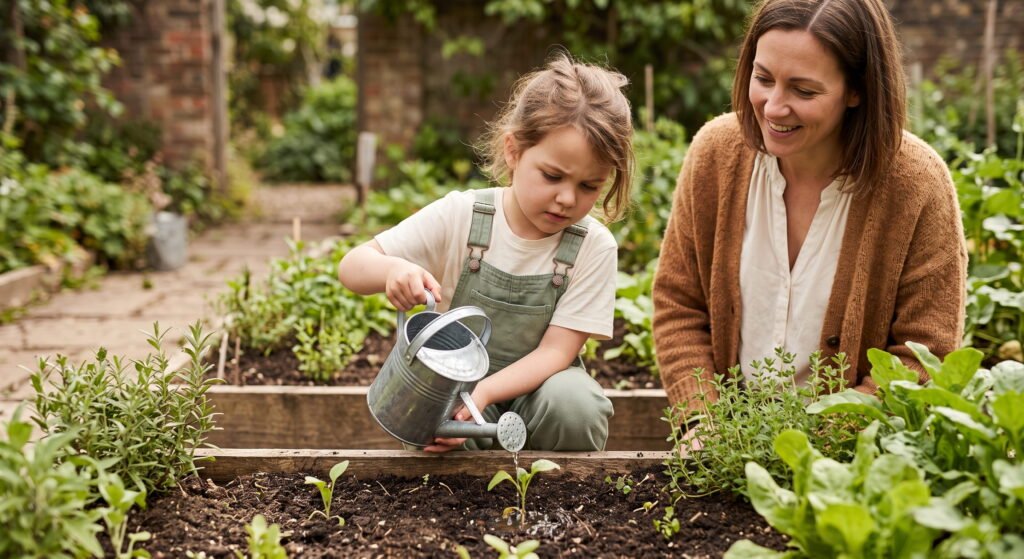
Gardening and nature exploration can help children observe living systems, develop vocabulary, practise care and ask scientific questions. Planting, watering, comparing growth and noticing seasons make change visible over time. Experiences must use safe materials and suitable supervision, and families should confirm what gardening or nature opportunities are currently available at each centre.
A seed does not respond immediately. Children wait, remember, compare and care before the first shoot appears. That slower rhythm differs from many toys and gives learning a real timeline.
Nature learning does not require a large vegetable garden. Leaves, shadows, rainwater, soil, birds and carefully chosen natural materials can all invite inquiry. This article explains the possibilities without claiming that either Childsplay Unlimited centre currently offers a particular garden feature.
Gardening creates a sequence children can revisit
Preparing soil, planting, watering and observing form a connected process. Children can remember what happened last time and notice what has changed. Photographs, drawings or simple measurements help make the timeline visible. A failed seed can also prompt useful questions about water, light, season, pests or viability.
Science begins with close observation
Children notice texture, colour, temperature, movement and growth. Kaiako can support comparison and prediction without supplying every explanation. Magnifiers, reference books and careful conversation may help children examine details. The emphasis is on evidence they can encounter rather than memorising isolated facts.
Questions that can grow from one plant
- Which part changed since yesterday?
- Where does the water go after we pour it?
- Why might this leaf feel different from that one?
- What creatures visit, and what are they doing?
- How could we record the plant’s height without damaging it?
New vocabulary attaches to real experience
Words such as root, stem, damp, sprout, fragile and seasonal become easier to understand when children can see and touch what they describe. Home-language names and family gardening knowledge can enrich the conversation. Teachers should check pronunciation and meaning rather than assuming one English label is the only valuable term.
Care builds responsibility gradually
Children may help water, return tools or protect a young plant. Responsibilities need to be real but manageable. Adults remain accountable for health and safety and do not shame children when something is forgotten or overwatered. The purpose is to experience contribution and consequence within a supported relationship.
Kaitiakitanga is learned through repeated practice
Guardianship is stronger when children regularly care for places and living things, notice impact and participate in decisions. A one-off recycled craft cannot carry the whole concept. Kaiako can connect daily actions with local stories and whānau knowledge, using te ao Māori concepts respectfully and accurately.
Nature play can support wellbeing without making medical claims
Many children find outdoor observation, soil, water and living things engaging or calming. Experiences also involve movement and sensory variation. Individual responses differ, and nature play should not be presented as treatment. Families can share sensory, mobility, allergy or health needs so participation is planned appropriately.
Safety starts with plant and material selection
Education guidance warns that natural materials should be non-toxic and that poisonous plants or small seeds can be hazardous. Tools, potting materials, water containers and produce need age-appropriate procedures. Centres also manage handwashing, supervision and any relevant allergies. Families should follow centre rules before bringing seeds, plants or food.
Eating what is grown requires separate care
Growing herbs or vegetables can connect children with food, but tasting introduces hygiene, choking, dietary and allergy considerations. Adults must use current centre procedures and gain the information or permission required. A successful garden does not mean every child should automatically eat the harvest.
Small urban spaces still contain nature
Containers, vertical planting, weather observations and visits from birds or insects can create meaningful investigation. Children can map shade, collect fallen leaves where appropriate or compare soil after rain. The quality of attention matters more than trying to imitate a rural setting.
Families can contribute knowledge without pressure
- Share the name or story of a plant important to your family.
- Offer home-language vocabulary and accurate pronunciation.
- Explain any allergy, cultural practice or sensory consideration.
- Contribute safe materials only after centre approval.
- Talk with the child about changes noticed across days.
What to ask the centre
Ask what current nature or gardening experiences are available, how materials are selected and how children participate in care. Find out how observations are revisited and how family knowledge is invited. Because environments and programmes change, confirm details directly rather than relying on an older photograph or article.
A garden is valuable when it remains alive in the curriculum
The richest learning is not the ceremonial planting day. It is the return: checking soil, noticing a chewed leaf, measuring growth, changing the plan and deciding what care is needed next. That continuity helps children experience themselves as observers and contributors within a living environment.
Seasonal change gives the curriculum a local rhythm
The same outdoor place can offer different questions after rain, during flowering or as daylight and temperature shift. Teachers can help children compare rather than presenting seasons as four abstract pictures. Families may contribute observations from home or cultural knowledge connected with local seasonal markers. Returning to the same place makes change noticeable and ties learning to the community children actually inhabit.
Gardening and nature exploration FAQs
Does Childsplay Unlimited have a garden?
Ask the relevant centre about its current environment and programme. This article describes learning possibilities and does not confirm a particular garden feature.
Are all natural materials safe for play?
No. Plants, seeds, soil products and found materials need suitable selection, condition, supervision and age-appropriate procedures.
Can children eat food they grow?
Only within the centre’s current food-safety, allergy, dietary and supervision procedures. Families should not assume tasting is automatic.
How can apartment families continue nature learning?
Observe weather, shadows, street trees, birds or container plants and revisit changes through conversation, drawing or photographs.
Contact Childsplay Unlimited
Ask about current nature learning at Childsplay Unlimited. Contact Mt Roskill on 09 627 9041 or Kingsland on 09 846 8908 to arrange a visit and discuss the environments, safety practices and experiences available now.