

First aid and hygiene work together through trained response, prevention and accurate follow-up
Licensed centre-based services must meet first aid and hygiene requirements. Qualified adults respond to injury or illness, while daily handwashing, cleaning, nappy-changing, toileting, laundering and food routines reduce avoidable risk. Parents can ask how first aid coverage, supplies, incident records and family communication work in practice, without expecting a centre to prevent every childhood illness or minor injury.
First aid is the response when something has happened; hygiene is part of preventing infection and maintaining safe care. Both depend on consistent systems rather than one trained person or a cleaning timetable kept out of sight. The environment, staff roles, supplies, documentation and communication all matter.
Ministry centre-based licensing guidance includes requirements for safe and hygienic premises, nappy changing, first aid qualifications, response to infectious illness and medical incident management. Parents do not need to audit the centre as inspectors. They can ask practical questions and observe whether everyday routines appear organised, respectful and connected with children’s wellbeing.
First aid coverage should exist across the service
Current Ministry guidance sets requirements for first aid-qualified adults in centre-based services and applies coverage across children at the service and on excursions. Parents can ask how the centre maintains current qualifications and coverage during breaks or outings. Do not assume every staff member has the same qualification or specialist health training.
A response includes more than treatment
- Make the area safe and attend to the child.
- Use appropriate first aid or emergency assistance.
- Maintain supervision of other children through team communication.
- Contact family or emergency services according to the procedure.
- Record the event and review any hazard or plan change.
The exact response depends on the incident. This article is not first aid instruction and should not be used during an emergency.
First aid supplies need access and control
Supplies should be available to authorised adults, maintained and suitable for the setting, including outings. They also need to be kept away from unsupervised child access. Individual emergency medicine is managed under its own plan and must not be confused with general first aid supplies.
Incident communication should be clear
- What staff observed and when
- What first aid or assistance was provided
- Whether the child returned to normal activity
- When and how the family was contacted
- What follow-up, monitoring or environmental change is required
Hand hygiene needs the right moments
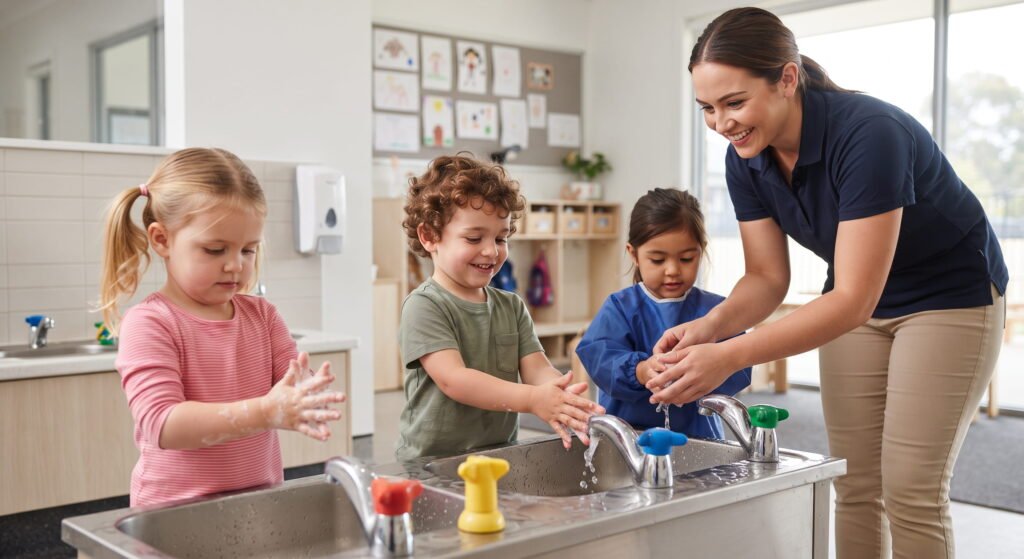
Effective handwashing is tied to routines such as food, toileting, nappy changing, bodily fluids, outdoor play and illness response. Facilities should be usable for children with appropriate support. Adults model technique and supervise without turning hygiene into punishment or shaming a child who needs help.
Nappy changing and toileting protect dignity
Care spaces and procedures should reduce contamination while providing appropriate privacy, supervision and communication. Families can share skin, toileting and cultural information privately. Staff should never discuss a child’s accidents or care details casually in front of other families.
Cleaning should match how an item is used
High-touch surfaces, mouthed toys, food areas, bedding and bodily-fluid incidents do not all require the same routine. Ask how the centre separates clean and used items and responds when illness levels change. Strong smells or visible chemical bottles are not proof of effective hygiene; products must be used and stored safely.
Food hygiene includes active supervision
Safe preparation, appropriate food form, hand hygiene and clean surfaces work with close supervision while children eat. Ministry criteria require seated, supervised eating with clear adult visibility and readiness to intervene. Discuss allergies, feeding, texture and individual needs through the centre’s formal process.
Infection control also depends on family action
- Follow the current illness and exclusion policy.
- Report relevant diagnoses or exposure promptly.
- Keep spare clothing and personal supplies clean and labelled.
- Do not send shared food without checking the centre policy.
- Update health plans, contacts and authorised collectors.
Children can learn without carrying adult responsibility
Children can practise handwashing, coughing into an elbow, using tissues and telling an adult about pain. Adults remain responsible for cleaning, health decisions, supervision and first aid. Avoid frightening children with detailed infection explanations or blaming them when a skill is still developing.
Ask about improvement after an incident
A record should support follow-up, not merely prove that a form was completed. Ask whether a recurring injury suggests an environmental change, whether supplies need restocking or whether communication was timely. Individual records are private, but the centre can explain its general improvement process.
Prepare a small, accurate family health profile
Before enrolment, give the centre the current information it requests about allergies, skin care, toileting, communication, feeding and relevant medical needs. Label personal items and explain which supplies are provided from home. Update the profile when a product, diagnosis or routine changes. This does not mean sending unnecessary private history; it means ensuring the people providing daily care have usable, authorised information and know when to contact you.
At collection, distinguish an incident that needs prompt follow-up from a general learning conversation. Ask for the written record where appropriate, check what the child may need at home and confirm who will provide any further information. If symptoms or injury require clinical assessment, use qualified health advice rather than asking centre staff to diagnose.
Verify practices at Mt Roskill or Kingsland
The current staff, physical layout and routines differ. Ask the relevant Childsplay Unlimited team how it maintains first aid coverage, records incidents and manages daily hygiene. Share any individual health, skin, toileting, allergy or feeding needs in a private meeting.
First aid and hygiene: parent FAQs
Does every childcare worker need the same first aid qualification?
Ask how the centre meets current coverage requirements. Do not assume every person has identical training.
Can hygiene prevent every illness?
No. Good practices reduce avoidable risk, but shared early learning environments cannot promise zero illness.
Should parents receive incident information?
The centre should explain its current recording and family-notification process and what applies to the specific event.
Is first aid training the same as medicine training?
No. Individual medicine or procedures may require separate authority, instructions and training.
Contact Childsplay Unlimited
Ask about first aid and hygiene at Childsplay Unlimited. Call Mt Roskill on 09 627 9041 or Kingsland on 09 846 8908 to visit the relevant centre and discuss current coverage, routines and individual health information.