


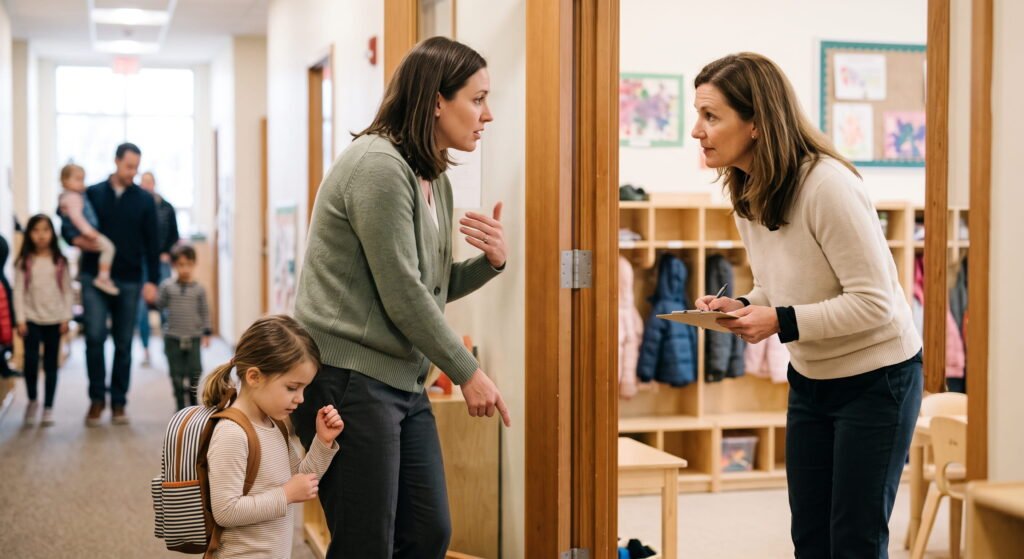
The doorway conversation carries information digital tools can miss
Brief drop-off and pick-up conversations help parents and kaiako exchange immediate information about sleep, health, food, mood, collection changes, interests and the day’s experience. They should stay focused and protect privacy. Storypark can add depth over time, while urgent, sensitive or complex matters need the centre’s correct direct or planned communication channel.
Arrival and collection are busy transitions. A useful conversation may last less than a minute, yet it can change how a teacher understands the child or how a family supports the evening. The goal is not a complete report at the doorway; it is accurate, relevant information reaching the right person.
When a topic requires detail, privacy or decision-making, families and teachers need another time and place. Strong communication includes knowing when the brief handover is enough and when it is not.
Drop-off gives the day a starting context
Share information that may affect care: an unusual night, reduced appetite, medicine administered, a new rash, a family event, a different collector or a strong current interest. Specific facts are easier to use than ‘bad morning’. Tell the teacher what happened and what the child may need, while allowing the child to enter the day without hearing a negative label.
A ten-second drop-off structure
- State the important change.
- Explain the likely effect or required action.
- Confirm who will collect and the best contact if needed.
The teacher’s acknowledgement matters
A handover is complete only when the information has been received. The teacher may repeat the key point, direct the parent to a form or identify another responsible person. If the room is busy, do not assume a passing comment has entered the centre’s records. Follow the formal process for medication, health, collection or enrolment changes.
Pick-up should connect wellbeing and meaning
Parents often need to know food, sleep, toileting, medication and emotional information. A specific learning or relationship moment can also help the family understand the child’s day. ‘They worked for a long time on a ramp with Maia’ offers more insight than ‘good day’. The amount of information may vary, but important care facts should not be hidden behind a cheerful summary.
The child belongs in the conversation
Adults can invite the child to show, recall or add to the story without interrogating them. A teacher might mention one cue and pause. A parent can listen before asking many questions. Children also hear how adults talk about them; respectful language protects dignity and reinforces that home and centre are connected rather than competing authorities.
Avoid the public problem-solving meeting
Behaviour, family circumstances, developmental concerns or conflict with another child deserve privacy. Ask to arrange a conversation instead of discussing details beside other families. Teachers must also protect other children’s information and may explain the centre’s response without identifying another child.
Storypark adds another time horizon
Digital stories, photos or routine updates can show patterns and learning that do not fit into collection time. They also allow families to respond after the rush. Storypark does not guarantee immediate attention, so urgent collection, medication or health information should use the centre’s required direct channel.
Different collectors need a shared system
When parents, grandparents or other authorised adults collect on different days, decide how information reaches the people who need it. Keep authorisations current and avoid asking the child to carry important messages. A family note or agreed digital routine can support continuity, provided privacy is protected.
Use questions that invite evidence
- What held their attention today?
- How did they manage the transition or rest period?
- Was anything different about food, toileting or mood?
- Is there something we should follow up tomorrow?
- Would this topic be better discussed privately?
Repair communication when something is missed
If a message did not reach the right person, focus first on the practical correction. Clarify what was said, what action was expected and what channel should be used next time. A recurring failure deserves a planned discussion with the appropriate centre leader. Blame at a busy doorway rarely creates a safer system.
Notice the pressure of timing
Families should arrive with enough margin for a real handover and collect before the centre closes. Mt Roskill publishes 7:15am–5:30pm weekday hours; Kingsland publishes 7:30am–6:00pm. Confirm current sessions and collection expectations. A rushed arrival at the last possible moment reduces space for communication and backup planning.
A weekly communication review
- Check whether health, collection and contact records remain current.
- Compare digital updates with what the child and teachers say.
- Identify a question that needs a planned private conversation.
- Share one home connection relevant to the child’s learning.
- Confirm which adult will carry information on each booked day.
Small conversations build a larger partnership
Trust grows when information is accurate, received, acted on and followed up. Not every handover will be detailed, and busy moments are normal. Over time, families should experience a reliable combination of welcome, essential care information, meaningful learning communication and access to longer discussion when needed.
Finish the handover with one clear next step
When information requires action, end by confirming who will do what. The parent may supply a document, the teacher may observe a pattern or the centre leader may arrange a meeting. Set a realistic follow-up point rather than leaving the concern suspended between hurried conversations. A short written confirmation can help when several adults are involved. This keeps the doorway exchange useful without asking it to carry an entire problem-solving process.
Drop-off and pick-up communication questions
What should I share at drop-off?
Share specific changes that may affect care, safety, wellbeing or collection, then complete any required formal record.
What if the teacher is busy?
Ask who should receive the information or use the centre’s required process rather than assuming a passing comment is enough.
Can sensitive concerns be discussed at pick-up?
Arrange a private conversation so the child, other families and confidential information are protected.
Does Storypark make handovers unnecessary?
No. It adds useful documentation, while direct and urgent information still needs the appropriate immediate channel.
Contact Childsplay Unlimited
Learn how daily communication works at Childsplay Unlimited. Call Mt Roskill on 09 627 9041 or Kingsland on 09 846 8908 to arrange a visit and ask about handovers, Storypark and private family conversations.