


Childcare health and safety is a system of daily practice, planning and communication
Licensed early learning services must meet health and safety requirements covering hygiene, hazards, emergencies, sleep, food, illness, first aid, medicine and child protection. Parents can ask to see relevant policies, observe ordinary routines and keep contact and health information current. A tour cannot prove every procedure, so combine direct observation with specific questions and current centre documentation.
Health and safety at childcare is more than a locked gate or a first aid kit. It includes the way adults supervise changing play, manage hazards, prepare for emergencies, respond to illness, administer authorised medicine, protect sleep and eating, maintain hygienic routines and communicate with families. These systems should support children to explore and learn rather than remove every worthwhile challenge.
The Ministry of Education explains that licensed early learning services must meet health and safety criteria set by education and other agencies. Licensing criteria are minimum requirements, not a substitute for parents understanding the specific service. Families can ask how Childsplay Unlimited Mt Roskill or Kingsland applies its current policies in the environment their child would use.
Use three types of evidence
- Observe: watch how adults position themselves, respond to children and manage ordinary transitions.
- Ask: request a practical explanation of procedures relevant to your child.
- Confirm: review current written information, authorised forms and location-specific arrangements.
A tidy room can be reassuring but does not show how an emergency, injury or infectious illness is handled. A strong answer connects policy with actual people, roles and records.
Supervision changes with the activity
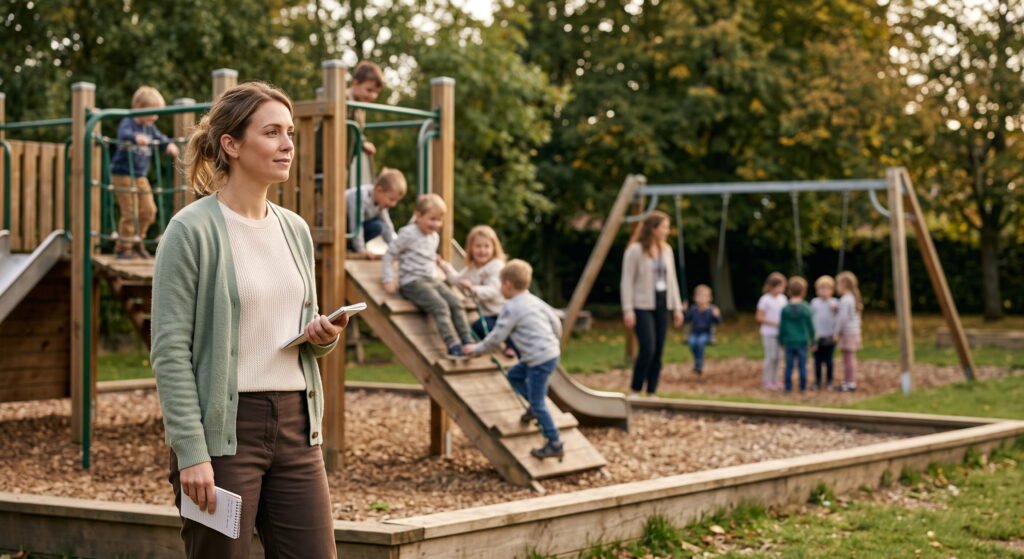
Active supervision involves positioning, scanning, listening, anticipating and engaging. The useful adult location during climbing may differ from the useful location during quiet indoor play. Teachers need to notice the whole group while responding to individual children. Parents can observe whether adults can see key areas, communicate with each other and move when risk changes.
Hazard management should preserve meaningful challenge
Licensed services are required to manage hazards and keep premises, facilities and equipment safe. This does not mean children never climb, use tools or encounter manageable uncertainty. Ask how the team distinguishes a learning challenge from an unacceptable hazard, completes checks, records incidents and changes the environment after new information.
Questions about the daily environment
- How are indoor and outdoor areas checked before and during use?
- How are broken or unsafe resources removed from access?
- How do teachers manage gates, water, heights and moving equipment?
- What happens when an injury reveals a previously unnoticed hazard?
- How are children included in learning safe ways to use spaces?
Hygiene is built into care and routines
Handwashing, nappy changing, toileting, food preparation, cleaning, laundering and responding to bodily fluids require consistent procedures. Good hygiene should protect health and the child’s dignity. During a visit, notice whether handwashing facilities are usable, care spaces offer appropriate privacy and adults move between cleaning and child interaction without obvious cross-contamination.
Food and sleep require active oversight
The Ministry sets criteria for safe food, supervision while eating, bottle feeding and sleep. Families should discuss allergies, intolerances, religious food guidelines, bottles, sleep and individual health needs directly with the centre. Current arrangements differ between locations; do not assume the Kingsland food or sleep routine matches Mt Roskill.
Health information must remain current
Tell the centre about allergies, medication, medical conditions, communication of pain, mobility, feeding or emergency needs through its formal process. Update contact details and authorised collectors. A verbal comment during a rushed drop-off may not replace required documentation. Ask how relevant information reaches staff while privacy is protected.
Emergency planning includes family communication
Early learning services maintain emergency plans and practise drills. Parents should know how the centre may contact them, where children may relocate and who may collect. The Ministry advises keeping emergency contacts current and following the service’s instructions about collection. Do not arrive at an emergency site or remove a child outside the agreed process unless directed.
Records and follow-up matter
- Ask how accidents, injuries, illnesses and medicine are recorded.
- Clarify when parents are contacted immediately or at collection.
- Know who can explain an incident and the next preventive step.
- Check how complaints or unresolved concerns can be raised.
- Keep copies of individual plans and authorisations current.
Policies should be available for meaningful questions
The Ministry notes that parents can ask to see health and safety policies. Read the sections most relevant to your child rather than judging the service by the size of the folder. Ask how staff learn the procedure and how updates are communicated. A policy is useful when the people in the centre can explain and apply it.
Turn a concern into a clear follow-up
If something feels unclear, note the date, place and specific behaviour you observed, then ask the centre for an explanation through its usual concern process. Separate what you saw from assumptions about motive. A calm, documented question gives the team a fair opportunity to investigate, respond and explain any corrective action. Urgent danger requires immediate escalation through the appropriate emergency or regulatory channel.
Compare the two centres accurately
Mt Roskill is at 456 Hillsborough Road and publishes weekday hours of 7:15am to 5:30pm. Kingsland is at 6B Western Springs Road and publishes weekday hours of 7:30am to 6:00pm. Visit the location you are considering and confirm its current entry, collection, food, sleep, emergency and health procedures with that team.
Childcare health and safety: parent FAQs
Can parents ask to see health and safety policies?
Yes. Ask the centre for the current policies relevant to your questions and how they operate in practice.
Does safe childcare mean no risky play?
No. Appropriate challenge can support learning. Adults manage hazards and supervise so the level of risk is suitable for the children and context.
Should individual health details be discussed on a tour?
Arrange a private conversation and use the centre’s formal documentation process. Protect the child’s privacy.
Are both Childsplay locations operationally identical?
Do not assume this. Confirm current procedures and the environment directly with Mt Roskill or Kingsland.
Contact Childsplay Unlimited
Ask Childsplay Unlimited about health and safety at the centre relevant to your family. Call Mt Roskill on 09 627 9041 or Kingsland on 09 846 8908 to arrange a visit and discuss current policies, routines and individual information.