
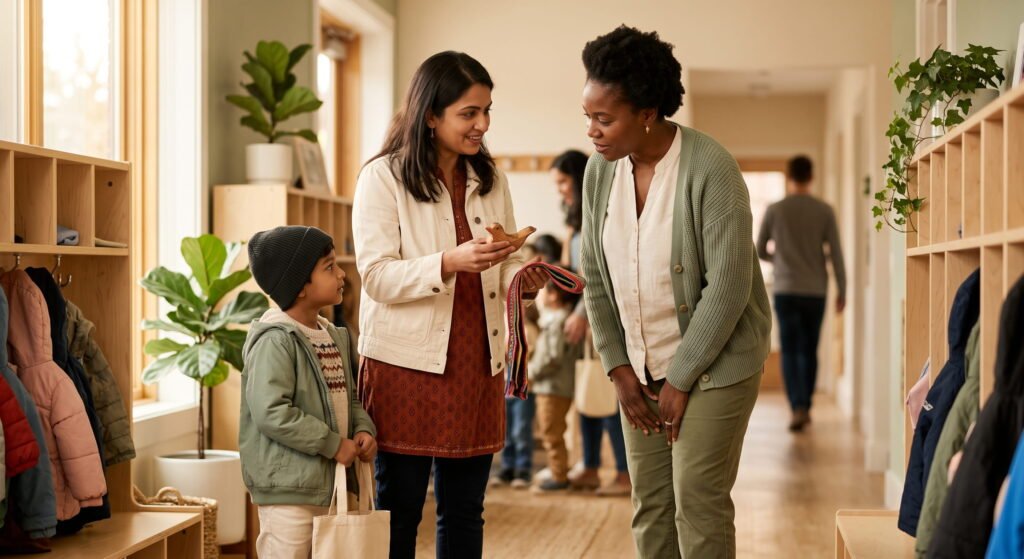
Meaningful celebration grows from relationship and continuity
Cultural events can strengthen identity, curiosity, respect and whānau participation when they are planned with knowledgeable communities, connected to everyday curriculum and represented accurately. A single food, costume or craft should not stand in for a whole culture. Children need context, varied perspectives, voluntary participation and opportunities to revisit learning beyond the event date.
Matariki, Diwali, Lunar New Year, Eid, Pacific language weeks and many family occasions can open rich learning. They can also become shallow when adults select a few attractive symbols, speak for communities they do not know and pack everything away the next day.
The question is not whether early learning should acknowledge cultural events. It is how the centre can do so in a way that affirms the children present, respects a bicultural foundation and avoids turning living cultures into themes.
Start with the people connected to the event
Ask which children, whānau or local communities have a relationship with the occasion and what they want others to understand. Invitation is different from expectation. Families should be able to contribute a story, language, object or idea if they choose, and also decline without their child becoming a representative for an entire religion, nation or culture.
Learn before choosing the activity
An attractive craft found online may combine symbols inaccurately or detach sacred elements from context. Educators need reliable sources and, where appropriate, guidance from people with relevant knowledge. They should distinguish traditions that vary between regions, families or denominations rather than presenting one practice as universal.
A planning filter before an event appears on the calendar
- Whose identity or history is involved, and have their perspectives been invited?
- What do we understand about meaning, language and variation?
- How does this connect with children’s current questions or family aspirations?
- Could any resource, costume, food or action be sacred, stereotyped or unsafe?
- What learning and relationships will continue after the date?
Move beyond food, flags and festivals
Food, clothing, music and visual art can be meaningful when contextualised, but culture also includes relationships, values, histories, humour, language, belief, migration, place and everyday family life. If children see only spectacular celebrations, they may miss the ordinary, diverse ways people live within a culture.
The event should not freeze a culture in the past
Cultural knowledge includes tradition and contemporary life. Children should be able to encounter current authors, artists, families, technologies and experiences as well as historical stories. Presenting a community only through old-fashioned clothing or distant places can reinforce stereotypes, especially when children from that community live varied lives in Auckland today. Educators can choose resources that show internal diversity and change, then invite children to make connections without deciding that one image defines who anybody is.
The child should not carry the burden of expertise
A child may feel proud to share, uncertain, private or unfamiliar with the event. Adults should not ask them to authenticate a display or answer classmates’ questions on demand. Teachers can check privately, provide choices and accept that family practice may differ from a textbook description. Identity is not a classroom assignment.
Participation can take different forms
Some families may have religious or cultural reasons not to join a particular practice. Others may enjoy observation but not costume, food or performance. A respectful programme explains the learning purpose, communicates in advance where needed and provides meaningful alternatives without isolating a child. Current centre policies and dietary or allergy procedures must still be followed.
Matariki requires local and current understanding
Matariki learning can involve remembrance, celebration, planning, environment and relationships, but practices and visibility of the star cluster vary. Centres should use current authoritative guidance and deepen local relationships rather than treating one artwork as the definitive tradition. Te ao Māori belongs throughout the year, not only around a public holiday.
Signs the learning has moved beyond tokenism
- Children encounter books, names, language and perspectives across the year.
- Whānau voices influence the plan without being used as decoration.
- Educators acknowledge variation and correct mistakes openly.
- Questions lead to continued stories, play, research or community connections.
- Displays avoid generic costumes, caricatures and sacred symbols used as props.
Notice who is positioned as the norm
Review language and images so one group is not presented as ordinary while everybody else appears only during celebrations.
Documentation needs cultural and privacy care
Photographs can make participation visible, but permission to attend is not automatically permission to publish. Captions should avoid claims about a child’s identity or beliefs that the family has not made. Correct spelling, macrons and names matter. Sensitive objects or ceremonies may not be suitable for photography at all.
Review what children actually learned
After an event, teachers can revisit children’s comments, questions and misconceptions. Did the experience strengthen a child’s identity, deepen respect or simply produce matching artwork? Whānau feedback can reveal what felt authentic, missing or uncomfortable. Review turns good intentions into better future practice.
Ask about the current community, not a generic calendar
Mt Roskill and Kingsland may have different children, whānau connections and current priorities. Ask the relevant centre how events are selected and how everyday curriculum supports cultural identity between celebrations. Do not assume both locations observe the same occasions in the same way.
Cultural celebrations in childcare: FAQs
Should centres celebrate every cultural event?
No service can treat every occasion meaningfully. Choices should reflect curriculum purpose, the community, reliable knowledge and capacity for respectful follow-through.
Can parents be asked to lead a celebration?
They can be invited, but participation should be voluntary and respectful. A family should not be expected to represent an entire culture.
Are cultural crafts always inappropriate?
No. They can be valuable when accurate, contextualised and connected to real learning, but generic imitation or sacred symbols used casually can be harmful.
What if our family does not participate in an event?
Tell the centre. Educators should discuss respectful, meaningful alternatives and any relevant beliefs or boundaries with you.
Contact Childsplay Unlimited
Ask how culture is represented throughout the year at Childsplay Unlimited. Call Mt Roskill on 09 627 9041 or Kingsland on 09 846 8908 to arrange a visit and discuss your whānau’s languages, traditions, aspirations and boundaries with the relevant centre.