

Belonging tells a child: you have a place here
Mana whenua | Belonging is strengthened when children and whānau are welcomed, their identities and languages are visible, routines are dependable, and connections with home, community and place are respected. Belonging is more than settling quickly; it grows as children participate, care for the environment and recognise that they can influence life at the centre.
A labelled locker can show where a bag belongs, but a sense of belonging reaches much further. It is the confidence to carry a home story into play, approach a familiar adult, predict a routine, contribute to the programme and see family members treated as part of the learning community.
Te Whāriki describes early learning settings as part of children’s wider worlds. That makes belonging a relationship between people, culture, place and time, not a decoration added after the environment is organised.
Belonging includes the child and the whānau
Children notice how adults respond to the people important to them. When families are greeted with respect, given useful information and invited to contribute, the connection between home and centre becomes easier to trust. Participation should be possible in different ways; not every whānau can attend daytime events, speak confidently in English or contribute the same amount of time.
Transitions should recognise what children bring
Starting early learning is not about replacing home routines, language or relationships with a new institutional identity. Thoughtful transition planning learns from the family, introduces people and spaces gradually where possible, and builds familiar reference points. A comfort item, photograph, phrase, sibling connection or repeated farewell can help continuity, subject to the centre’s current procedures.
Signals that a place is becoming familiar
- The child recognises people, spaces and parts of the daily rhythm.
- They seek support and increasingly communicate preferences or needs.
- Home experiences and languages enter their play or conversations.
- They take responsibility for materials, routines or caring for the place.
- Whānau know who to speak with and how to share aspirations or concerns.
Predictability provides reassurance
Regular welcomes, farewells and care sequences can reduce uncertainty. Predictable does not mean rigid: a responsive teacher may adjust timing or support. What matters is that the child can build expectations about how people will respond. Sudden changes happen, so calm explanation and familiar relationships help the child make sense of them.
The environment should contain real identity
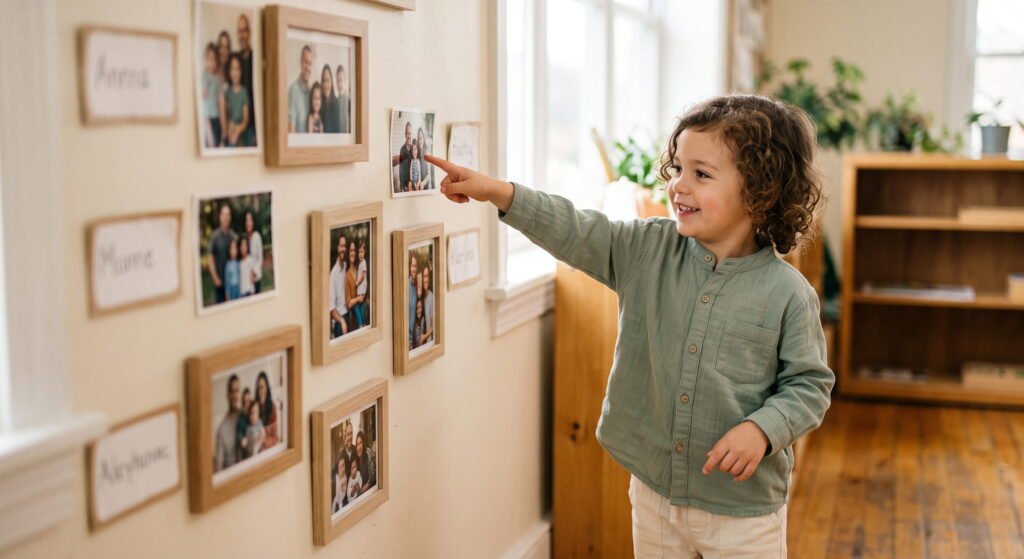
Family photographs, correctly written names, home-language words, children’s artwork and current stories can help children recognise themselves. Representation must remain accurate and consensual. A generic cultural poster cannot replace knowledge of the families present, and personal information should not be displayed or shared without appropriate permission.
Belonging is connected with whenua and local place
Mana whenua carries meanings that should not be collapsed into an English slogan. Official guidance connects belonging with relationships to Papatūānuku, whakapapa, local features, community and care for place. Services can deepen their local knowledge and relationships rather than borrowing disconnected stories or using Māori concepts as decorative labels.
Children need ways to influence the setting
Belonging develops when children are not merely accommodated but can take an active part. They might decide how to continue a project, help arrange resources, care for a garden area or negotiate a group routine. Adults still hold responsibility for safety and fairness, yet genuine participation communicates that the child’s presence makes a difference.
A belonging-focused centre conversation
- Share who and what is important in your child’s world.
- Explain names, pronunciation, languages and cultural practices that should be understood.
- Ask how the centre supports arrivals, farewells and changes between rooms.
- Look for current evidence of families and the local community in the curriculum.
- Agree how feedback, sensitive information and changing needs will be communicated.
Settling does not follow one timetable
Some children enter quickly; others observe for a long period or appear settled before reacting later. Age, temperament, language, previous experiences, attendance pattern and family circumstances all matter. Avoid promises that every child will settle within a fixed number of days. Instead, ask how teachers observe progress and adapt the transition with whānau.
Belonging can be revisited after the first weeks
Transition planning should not end because a child has stopped appearing unsettled. Changes in attendance, rooms, friendships, family life or developmental needs can alter how secure the centre feels. Teachers can review which people and routines the child relies on, whether their identity remains visible and how they participate. A family may also notice signs at home that are not obvious during the session. Reopening the conversation treats belonging as a continuing relationship rather than a short orientation task.
A transition review prompt
Ask what now helps this child recognise, influence and care for the place, and what connection may need strengthening next.
Belonging must not require sameness
A child should not need to hide a home language, family structure, disability, faith or cultural practice to fit in. Inclusive belonging holds common expectations for care and respect while adapting access and recognising difference. Families can ask whose voices are easy to see and how teachers learn about identities that are less familiar to them.
Visit the centre as its own place
Childsplay Unlimited has centres in Mt Roskill and Kingsland. Because belonging is local, visit the one you are considering and ask about its present community, routines and relationships. Confirm the operating details and transition approach directly; do not assume that an example from one location automatically describes the other.
Questions about belonging in early learning
Is belonging the same as a child no longer crying at drop-off?
No. Separation is one part. Belonging also includes identity, relationships, participation, familiarity, whānau connection and care for place.
Can a comfort item help?
It may, depending on the child and current centre procedures. Discuss safe use, storage and when the item is available.
How can families who are busy still contribute?
Short conversations, Storypark responses, home-language words, photographs with consent and sharing aspirations can all support partnership.
What if my child attends only a few sessions?
Consistency can still be built, but discuss attendance requirements and a transition plan with the relevant centre. Childsplay Unlimited has a two-session weekly minimum.
Contact Childsplay Unlimited
Find out how belonging is supported at Childsplay Unlimited. Contact Mt Roskill on 09 627 9041 or Kingsland on 09 846 8908 to arrange a centre-specific visit and discuss your child’s transition, relationships, language and family connections.