

What belonging looks like in practice
A childcare centre feels like a home away from home when children are known, welcomed and comforted by responsive adults; daily routines are predictable but flexible; family cultures and knowledge are respected; and children can explore with confidence. The feeling comes from consistent relationships, not décor alone.
‘Home away from home’ is a phrase many childcare centres use, but families deserve to know what it means in practice. It should not mean copying home exactly. Early learning is a shared community with its own relationships and routines. The goal is for children to experience security, belonging and room to grow.
These signs can help parents recognise a genuinely nurturing environment during visits and over the first weeks of attendance.
Children are known as individuals
Belonging begins when adults know more than a child’s name. Kaiako learn how the child communicates, what captures their attention, how they prefer to be comforted and which people, languages and experiences are important at home.
This knowledge appears in small moments: a familiar greeting, a favourite book placed nearby, time to watch before joining, or a conversation that connects yesterday’s play with something shared by whānau.
Relationships are warm and dependable
Young children borrow confidence from trusted adults. A responsive teacher notices cues, offers comfort, explains what is happening and stays emotionally available. Over time, repeated experiences help the child predict that someone will respond when they need help.
Consistency does not require one adult to be present every moment. It does require a team that shares information and approaches the child with common understanding. Ask how care information is passed between teachers and how relationships are protected during staffing changes.
Routines create a dependable rhythm
Arrivals, meals, rest, toileting, nappy changes and collection provide anchors in the day. A predictable rhythm can help children understand what comes next, while flexibility lets teachers respond to age, energy, sleep and individual need.
Families contribute essential knowledge. A centre should ask about routines at home and explain how centre routines work, including what can be adapted and what is shared across the group.
The environment invites participation
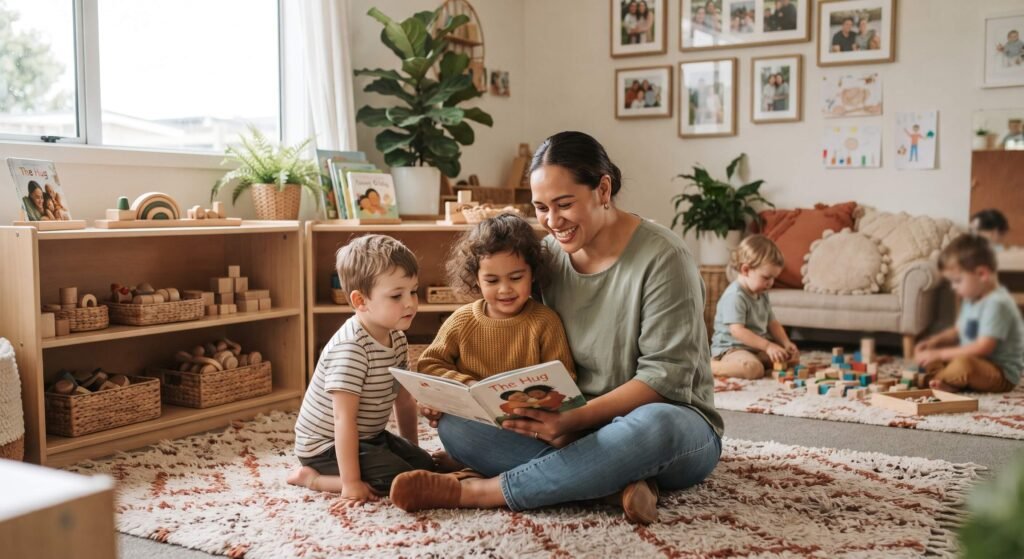
A welcoming room is not simply tidy or attractive. Resources should be within reach, spaces should support both active and quiet engagement, and children should be able to make meaningful choices. Personal touches—family photos, familiar words, current learning and children’s creations—can signal that this is their place too.
Outdoor areas matter as well. Movement, nature, sand, water and manageable physical challenge can give children different ways to explore, regulate energy and connect with others.
Culture, language and identity are part of everyday life
Belonging becomes stronger when children do not have to leave their identity at the door. Teachers can learn correct pronunciation, invite family knowledge, include home languages and represent cultures thoughtfully in stories, songs, celebrations and routines.
At Childsplay Unlimited, the centre team describes weaving te reo Māori and tikanga Māori into everyday practice through greetings, waiata, karakia and ideas such as manaakitanga and kaitiakitanga. It also welcomes families to share languages, traditions and aspirations.
Families are partners, not spectators
A home-away-from-home feeling is built with whānau, not delivered to them. Useful partnership includes honest drop-off and pick-up conversations, accessible learning updates and opportunities for families to contribute goals or context from home.
Childsplay Unlimited uses Storypark to help families stay connected with learning and daily experiences, alongside direct conversations. When you visit, ask the relevant centre to demonstrate its current communication process and explain who to contact with questions.
Settling is treated as a relationship process
Crying at separation does not mean a centre can never become familiar. What matters is how adults respond, how information is shared and whether the transition plan is adapted. Orientation visits, confident goodbyes and consistent attendance can all help build familiarity.
Ask what comfort will look like after you leave and how the team will update you. A reassuring answer should be realistic: settling differs between children, and partnership continues after the first day.
Belonging can look different at each age
For babies
Belonging may be visible in calm care moments, familiar words, responsive feeding and sleep conversations, and a trusted adult who recognises small cues. Parents should be able to explain home rhythms and understand how the centre will respond.
For toddlers
A toddler may show security by exploring away from a familiar adult and returning for reassurance. Predictable transitions, simple choices and patient help with strong emotions can make the environment easier to understand.
For older preschool children
Belonging may appear through friendships, responsibility, longer projects, humour, storytelling and confidence to contribute an idea. Children should be able to see their work, family knowledge and identity reflected without being expected to represent an entire culture.
These signs will not look identical for every child. Temperament, communication, development and previous care experiences all shape how security is expressed. The centre’s role is to notice the individual rather than demand one version of confidence.
Ask what belonging looks like on a difficult day
A genuinely nurturing environment is not defined only by calm mornings. Ask how the team responds when a child is tired, unsettled, missing a parent, struggling with a friendship or resisting a routine. The answer should describe patient support, communication and realistic boundaries rather than expecting children to be cheerful at all times.
Also ask how families are informed when a pattern develops. Belonging includes being able to discuss difficulties honestly and work on them together, without labelling the child as a problem.
Questions about a home-away-from-home environment
Does ‘home away from home’ mean there should be no tears?
No. Separation can be emotional. The meaningful signs are responsive comfort, communication and growing trust over time.
What should I look for on a visit?
Watch how adults respond to children, how routines flow, whether children can choose and participate, and whether family identities are visible and respected.
How can parents strengthen belonging?
Share routines, interests, important words, family photos, cultural knowledge and aspirations, and keep the centre informed about changes at home.
Is the building the most important factor?
No. Safe, engaging spaces matter, but dependable relationships and responsive practice are what make an environment feel secure.
Contact Childsplay Unlimited
Visit Childsplay Unlimited in Mt Roskill or Kingsland to experience the environment for yourself. Contact the relevant centre to discuss your child, current spaces and how orientation is arranged.